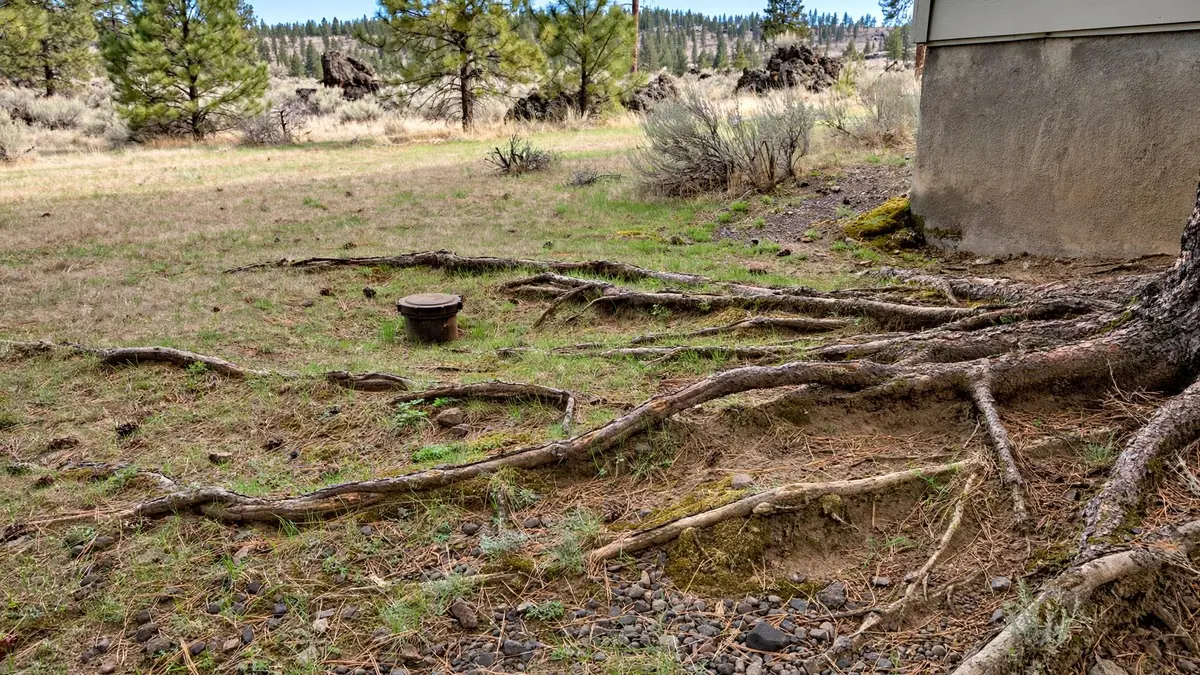
Under Bend's rules the lateral belongs to you, so root intrusion, cracks and blockages between the main and the house land on the owner. A labeled cleanout and a camera run turn a mystery backup into a clear plan.
What a lateral is and who owns it in Bend
Think of the lateral as the private route that waste takes from your plumbing out to the city's main. In Bend, it is yours. City of Bend utility standards treat the sewer service as the owner's property, with upkeep falling to the owner all the way from the main. The city maintains the main under the street.
That means a root problem, a crack or a blockage anywhere in the lateral is something you fix and pay for. It also means the cleanout, the capped pipe that gives access to the line, matters more than most owners realize.
Why roots find sewer lines
Roots do not break into healthy pipe. They follow moisture and nutrients, and a sewer line leaks warm, wet air and a little water at every joint. A tiny gap at a joint is enough for fine roots to enter, and once inside they grow into a mat that catches paper and grease.
Older pipe has more joints and more places to fail. Clay and cast iron laterals use short sections joined with mortar or lead and oakum, and the joints loosen over decades. Newer plastic pipe is smoother with fewer joints, but a poor connection or a dip in the slope can still collect debris.
Mature trees and shrubs near the line raise the odds. Bend neighborhoods with established landscaping, such as the older parts of town near downtown and the river, are the most likely places to see root trouble, though any lot with trees can.
Signs of a root problem
A single slow drain is rarely roots. Several fixtures together, or a drain that keeps returning, is the pattern to take seriously.
- A toilet that gurgles when the washer drains or someone showers.
- Repeated slow drains in the lowest fixtures, such as a basement tub.
- A backup that clears after cabling and returns within weeks or months.
- A sewer smell near the foundation or a lush, green patch of lawn over the line.
- A camera that shows roots entering at joints, or a cleanout that is hard to open.
Find and label your cleanout
Most houses have a cleanout, a capped pipe of three or four inches, near the foundation or in the yard where the lateral leaves the house. Some also have one at the property line. If you cannot find one, check the crawlspace, the garage and the area near where the main drain exits the house.
The cap should be accessible and not buried or painted shut. The owner is responsible for installing a cleanout if one is missing, in many jurisdictions, and adding one is a sensible investment. It gives a plumber direct access for cabling or a camera and may avoid pulling a toilet.
Label the cleanout, keep the area around it clear and keep a note of what you find. If the line has been scoped before, keep the video.
Your options when roots are the cause
Cutting roots clears the line. Only repair stops them from coming back, so a plumber should say which situation you are in after a camera run.
| Option | What it does | When it fits |
|---|---|---|
| Cable with a root cutter | Cuts roots out of the pipe | First-time or occasional root intrusion |
| Hydro jetting | Scours roots and buildup from the wall | Repeated roots with sound pipe |
| Spot repair at the joint | Fixes the entry point | A single known break or joint |
| Lining or replacement | Rebuilds the pipe | Many joints failing or a collapsed section |
What a camera inspection shows
A sewer camera is a waterproof lens on a flexible cable. The plumber feeds it through the cleanout and watches a monitor as it travels down the line. A good inspection records video and notes the distance to each defect, so you can see roots at 40 feet or a crack at 65.
The camera shows several things at once: the pipe material, the condition of the joints, any sag where water collects, roots entering and the point where the line connects to the main. It also lets you compare a quote against the footage. If one plumber recommends full replacement and the video shows a single failed joint, you have grounds to ask for a spot repair quote.
Ask for a copy of the video and keep it with your home records. A buyer, an inspector or a future plumber can use it.
Landscaping and prevention
You cannot always avoid roots near a lateral, but you can lower the odds. Avoid planting thirsty species such as willows and poplars close to the line. If you are choosing new trees, ask a nursery how far the roots spread and keep them well away from the pipe route.
Know where the line runs before you dig, plant or build. A call to 811 marks public utilities, but the private lateral is not marked, so a plumber's locator is needed for a fence post or a deck footing near the line.
Schedule a camera check every few years on an older line, and sooner after a backup. Roots that are cut early do less damage than a mass that has grown for years.
Buying a house with an older lateral
A sewer scope is one of the best inspections a buyer can add. For a modest fee, a plumber runs a camera down the lateral and records the condition. A buyer who knows about roots, a sag or a cracked section before closing can negotiate a repair credit, and a seller who has the video ready avoids surprises.
Ask the seller for any past scope video, repair records and permits. Ask whether the line has had backups and how they were handled. If the house was recently converted from septic to sewer, ask for the decommissioning paperwork for the old tank.
Septic-to-sewer homes and private pumps
Some Bend properties have moved from septic to sewer through the City of Bend's septic-to-sewer conversion program. The city says the property owner or hired contractor completes the plumbing on private property, including decommissioning the septic tank and connecting to the sewer stub-out, and handles the required inspections.
In some cases the public sewer is gravity-fed, and the owner may need to own and maintain a private grinder pump to move sewage uphill. A pump failure looks like a clog but needs a different repair. If your home has one, tell the plumber on the first call.
For repair options, see sewer line repair and hydro jetting. The same principles apply in Redmond, though city rules differ there.