Water Heater Installation & Replacement in Bend, OR
Choose the right tank, tankless or heat pump unit, sized for your house and installed to Oregon code.
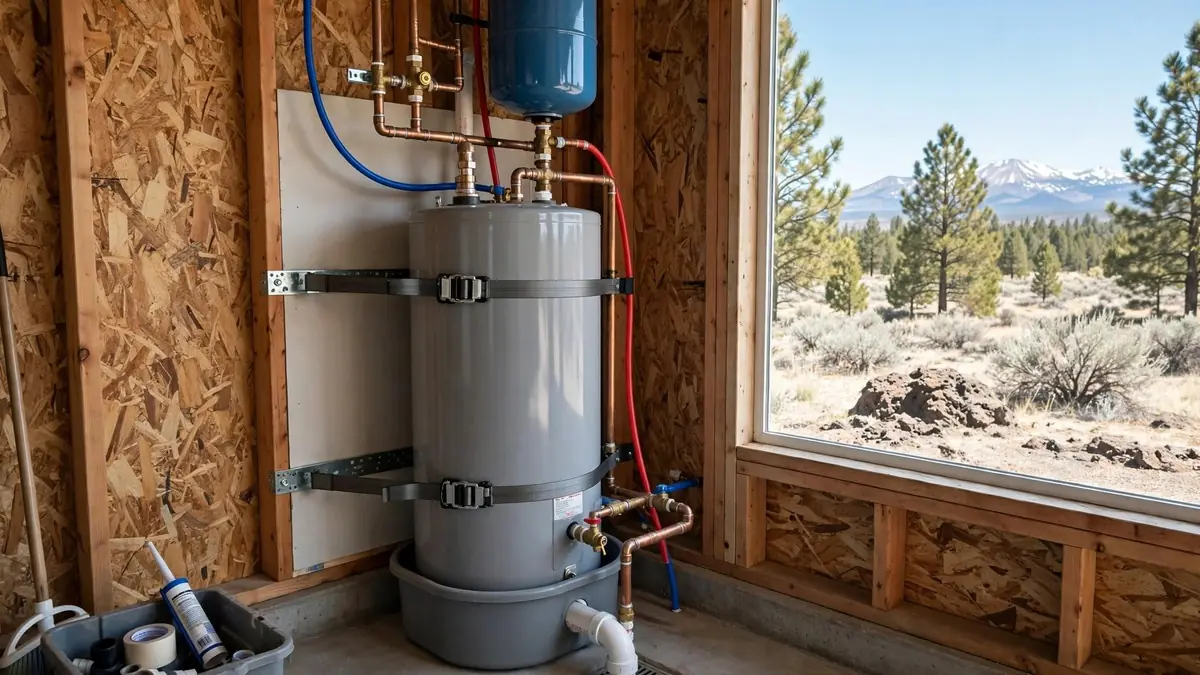
Replacing a water heater in Bend without the guesswork
The best water heater replacement is the one you plan before the old tank fails. A leaking tank forces a same-day decision with whatever unit is on the truck. A planned swap lets you choose the type, the size and the efficiency that fit your house and your energy bills.
Water heater installation and replacement in Bend covers three families of equipment: conventional tanks, tankless on-demand heaters and heat pump water heaters. Each suits different homes, and the right choice depends on the fuel available, the space around the unit and how much hot water the household actually uses.
If the old unit is still working but failing, water heater repair may buy time. If it is leaking from the tank body, replacement is the only fix.
Tank, tankless or heat pump
| Type | Best fit | Watch for |
|---|---|---|
| Standard tank | Most homes, lowest upfront cost, simple repairs | Standby heat loss, limited hot water in a long shower |
| Tankless gas | Long showers, small footprint, high-demand households | Gas line and venting upgrades, annual flushing |
| Tankless electric | Point-of-use or small homes with spare panel capacity | Large electrical load can exceed the panel |
| Heat pump (hybrid) | Households focused on lower electric use | Needs air volume and tolerates cool spaces poorly, so check the manufacturer's range |
The table is a starting point. A plumber confirms capacity, clearances and code requirements on site before quoting.
Match the heater to the household
A tank is sized by its first-hour rating, which measures how much hot water it delivers in the first hour of heavy use. A tankless unit is sized by flow rate and temperature rise. In Bend, incoming water is cold for a good part of the year, and the winter temperature rise a tankless heater must produce is larger than many online calculators assume.
Count the fixtures that run at once on a busy morning: a shower, a dishwasher, a washing machine. That number matters more than the number of bedrooms. A plumber can size the heater to your worst morning rather than your average one.
Incentives and fit for Central Oregon
Check incentives before you buy
Energy Trust of Oregon has offered cash incentives for qualifying heat pump water heaters installed through participating contractors, for customers of participating electric and gas utilities. Amounts and rules change, so confirm current eligibility with the program before buying.
Ask whether the installer works through the program. An incentive often has to be claimed by the contractor, and a missed step can forfeit it.
Where a heat pump unit works
A hybrid heat pump heater pulls warmth from the air around it. A garage or basement with room to breathe can work. A closet or an unheated space that falls well below freezing may reduce its efficiency or its ability to run at all.
Check the manufacturer's operating range against your space. Central Oregon winters are cold, and an unheated garage can be colder than the unit prefers.
What has to be true before going tankless
Switching to tankless is rarely a simple swap. A gas tankless unit often needs a larger gas line than a tank, a dedicated vent and a condensate drain. An electric unit may draw more amperage than the panel has to spare. These upgrades are the real cost of tankless, and they should appear in the quote as line items.
Cold incoming water in winter reduces the flow a tankless heater can deliver at a set temperature. Two showers and a dishwasher at once can overwhelm a small unit in January while working fine in July. Ask the installer for the winter flow rate at your target temperature, not the rated maximum.
Maintenance matters too. Tankless units need periodic flushing, especially on well water. Skipping it can trip error codes and shorten the unit's life, which is why tankless maintenance and repair exists as its own service.
What a typical replacement day looks like
Shut down
Power or gas is isolated and the old tank is drained.
Remove and set
The old unit comes out and the new one is leveled and strapped.
Connect and vent
Water, gas or electric, venting and the relief line are connected.
Test and walk through
Pressure, temperature and combustion are checked, and settings are explained.
Most replacements are finished the same day. Leave a clear path to the heater and keep pets out of the work area.
The details that make a replacement last
Items to confirm in the quote
- Permit and inspection where the Oregon Plumbing Specialty Code and local rules require them.
- A new expansion tank where the home has a closed system or a pressure-reducing valve.
- Seismic strapping, which Oregon code generally requires on water heaters.
- A relief valve with a proper discharge line that terminates safely.
- Correct venting and combustion air for gas units, set for the elevation.
- Removal and disposal of the old tank, and who handles it.
What moves the price of a water heater installation
Insurance may cover resulting water damage from a sudden tank failure, but it does not usually pay for the heater itself. Check that the quote lists the model and warranty terms.
Replacement across Bend and nearby towns
Installers book jobs across Bend and in the Redmond area, Sisters and Sunriver, with 97707 and 97759 homes often needing propane or electric options. Homes on private wells should have water tested before choosing a tankless heater, because mineral content can affect its heat exchanger.
If the old heater failed because a pipe froze or burst nearby, the repair may start with burst line repair before the new heater goes in.
Replacement jobs run from tight utility closets in older Old Bend houses to garage installs in Southern Crossing and Larkspur homes. Access, venting and the existing gas or electric supply decide how long a swap takes, so tell the installer which kind of space the tank sits in.
Water heater installation questions in Bend
A straightforward tank-for-tank swap usually takes a few hours. Changing fuel, adding venting or converting to tankless takes longer. The plumber should give you a time estimate when quoting.
Often yes for a standard tank when the unit is available and access is easy. Tankless and heat pump units may need ordering. Dispatch can tell you what is realistic for your situation.
Water heater replacement commonly requires a permit and an inspection under Oregon rules. The licensed contractor normally pulls it, and the price should say so.
It can be for households with high demand and the right gas supply and venting. It costs more upfront, needs annual flushing and does not suit every house. The sizing and gas line capacity decide it.
A plumber sizes it by peak demand, not bedroom count. A fifty-gallon tank covers many families, while larger households or soaking tubs may need more capacity or a tankless unit.
The installer normally hauls it away, and many scrap yards accept the steel. Confirm this is included in the quote so there are no surprises on the day.
Ready to replace your water heater?
Call for a written quote, or for same-day help if the tank is leaking.
Call (503) 974-3329