Water Heater Repair in Bend, OR
Cold showers, leaks and pilot failures diagnosed first, repaired when it makes sense and replaced when it does not.
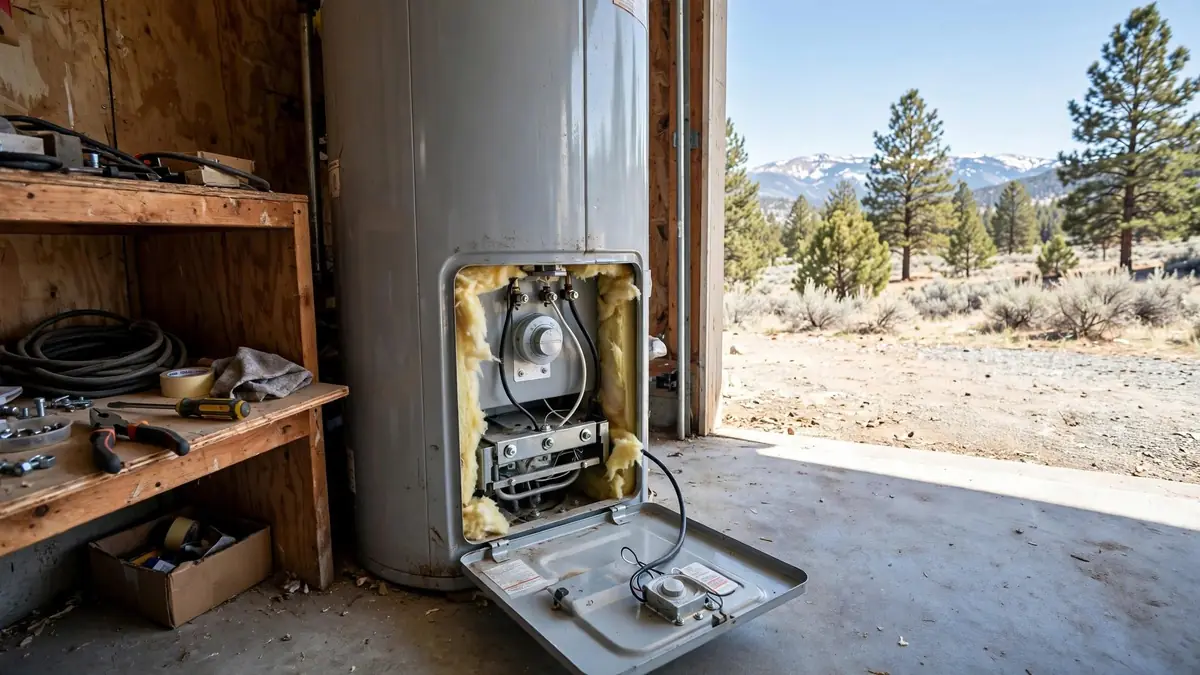
When the water heater quits in a Bend winter
A cold shower in January is the kind of failure people do not put off. Water heaters rarely die without warning, though. Rumbling from the tank, rust-colored hot water, a tripped breaker or a pilot that keeps going out are the usual early signs, and each one points to a different repair.
Water heater repair in Bend begins with a safety check. If water is pooling under the tank, the supply valve gets closed first. If you smell gas, everyone leaves the house and the gas utility or 911 is called from outside. Only after that does the diagnosis start.
Under the Oregon Plumbing Specialty Code, which follows the Uniform Plumbing Code (UPC), a relief valve needs a discharge pipe that ends where escaping hot water cannot hurt anyone, and a plumber should confirm yours does.
Many faults are small. A bad heating element, a failed thermostat or a worn thermocouple can be replaced in a single visit on a tank that is otherwise healthy. A leaking tank cannot be repaired, and that is the point where water heater installation becomes the honest answer.
Symptoms and what they usually mean
| Symptom | Gas tank | Electric tank |
|---|---|---|
| No hot water at all | Pilot out, bad thermocouple or gas valve | Tripped breaker, failed element or thermostat |
| Lukewarm only | Dirty burner, partly failed gas valve | One of two elements burned out |
| Popping or rumbling | Sediment hardening on the tank bottom | Sediment on the lower element |
| Water around the base | Tank leak, loose fitting or relief valve discharge | Same, plus check the drain valve |
| Rust-colored hot water | Corroded tank or depleted anode rod | Corroded tank or depleted anode rod |
The right column depends on the fuel your heater uses. If you are not sure, the label on the tank states it, along with the manufacture date, which matters for the repair-or-replace decision below.
How to decide whether the tank is worth fixing
A simple rule of thumb
If the heater is under about eight years old and the fault is a part, repair usually wins. Between eight and twelve years, repair is reasonable only for a cheap part. Past twelve, a repair that costs a large share of a new unit rarely pays back.
A tank that leaks from the body is finished regardless of age. Water coming from the relief valve or a fitting is different and often fixable, so do not assume the worst until a plumber has looked.
What a repair visit includes
The plumber checks the power or gas supply, tests the elements or burner, measures the thermostat setting, inspects the relief valve and drain valve, and looks at the anode rod. You get the findings and a price before parts are ordered.
The anode rod is worth asking about. It is a sacrificial metal rod that slows tank corrosion, and replacing a depleted one can add years to a tank that is otherwise sound.
What Central Oregon changes about water heaters
Bend city water is on the soft side, around one to one and a half grains of hardness per gallon, so heavy scale is less of a reason for failure here than in harder-water towns. Sediment still collects, and an annual flush keeps a tank quieter and the elements cleaner. Homes on private wells can differ, and a water test shows what the heater is dealing with.
Cold garages and crawlspaces matter more than water chemistry. A tank in an unheated space loses heat faster in winter, and exposed supply lines near it are the first pipes to freeze. If your heater sits outside the heated envelope, insulating the lines and checking the space for drafts is cheap protection.
Gas heaters need a clear flue and combustion air, and installers follow the manufacturer's rules for elevation, since Bend sits about 3,600 feet above sea level. A repair visit should include a look at the venting, not only the burner.
Gas, electric and propane tanks fail differently
Electric tanks usually have two elements and two thermostats. If the lower element fails you get less hot water, and if the upper one fails you get lukewarm water or none. A breaker that trips repeatedly points to a shorted element, not a bad breaker, and it should not be reset over and over.
Gas tanks depend on a flame, a thermocouple or flame sensor, and a gas control valve. A pilot that will not stay lit is often a worn thermocouple, which is a modest repair. A scorched or sooted burner, or any smell of gas, is a reason to stop and call.
Some homes outside town, including many near Sunriver and Sisters, use propane tanks. Propane heaters work like natural gas units for repair purposes, but the supply side differs, and running out of fuel looks exactly like a dead pilot. Check the tank gauge before calling.
Maintenance that actually extends tank life
Once a year, in this order
- Turn the thermostat down, shut the supply and flush a few gallons from the drain valve to clear sediment.
- Test the temperature and pressure relief valve by lifting the lever briefly, if the valve is accessible and in good condition.
- Inspect the anode rod every few years and replace it when it is more than half consumed.
- Check for corrosion on fittings and the area around the base for slow leaks.
- Set the thermostat near 120 degrees Fahrenheit, which reduces scald risk and slows scale and standby loss.
Safe steps when the hot water stops
Before you call
- Look under and around the tank. If water is leaking, close the cold-water supply valve on top of the heater.
- On an electric tank, check the breaker. On a gas tank, look at the pilot window, but do not relight it if you smell gas.
- Turn the thermostat to a normal setting if someone lowered it, then wait an hour before assuming the unit is dead.
- Never plug or cap the relief valve discharge pipe, even if it drips.
- Photograph the data label showing model, serial number and manufacture date for the plumber.
What drives the cost of a water heater repair
Water that escapes from a failed tank is sometimes covered when it damages the home, while the heater itself is usually not. Ask your insurer before cleanup and keep the old unit until the claim is settled.
Related water heater work in Bend
If your heater is a wall-mounted on-demand unit, tankless service covers flushing and error codes that differ from a tank. If a leak has already soaked the floor or drywall, leak finding can confirm the heater is the only source.
Calls come from Bend and from Redmond, Sisters, La Pine and Sunriver. Many Sunriver and Sisters homes use propane or electric heaters, so mention the fuel when you call.
Homes in the Orchard District and around Pilot Butte include older tanks that have been repaired several times, while the newer builds in NorthWest Crossing and Century West usually have heaters still within their service life. A crew that knows the age of the home can bring the likely thermostat, element or anode rod.
Water heater repair questions in Bend
Yes. The emergency line is open overnight, on weekends and on holidays. A tank leaking onto a floor gets priority, and a lukewarm shower may be scheduled for the next daytime slot.
Many tank heaters work for ten to fifteen years, with gas and electric units behaving differently. Maintenance, location and water quality all change it. The manufacture date on the label helps you plan.
Sediment settles on the bottom of the tank and traps small pockets of water, which pop as they boil. A flush often quiets it. If the noise returns right away, the tank may be near the end of its life.
Annual flushing helps most tanks, especially those that run hot or serve a large family. On soft city water, sediment builds more slowly, but it still builds. Ask the plumber what the drain valve and tank condition allow.
A brief drip during heating can happen as water expands. A steady drip or a spray points to excess pressure, a failing valve or a thermal expansion problem and needs a plumber.
Yes. Landlords and property managers call when a tenant loses hot water. Give dispatch the unit's fuel type and location so the right parts are on the truck.
No hot water in Bend tonight?
Close the supply valve if the tank is leaking, then call the 24/7 line.
Call (503) 974-3329