Well Pump Repair in Bend, OR
Pumps, pressure tanks and switches diagnosed for private wells around Bend, Tumalo, Sisters, Sunriver and La Pine.
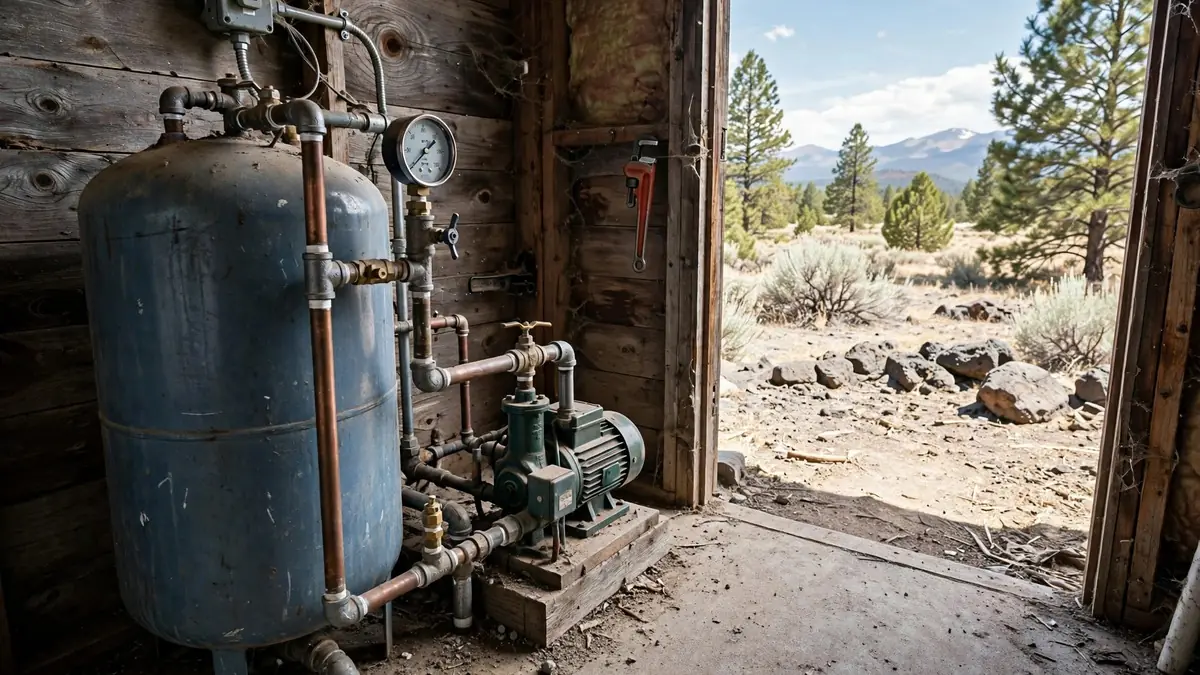
Why well water homes call a plumber first
When a home runs on a private well, the plumbing starts at the pump rather than at a meter. The pump, the pressure tank and the pressure switch all sit between the aquifer and your faucet, and any one of them can fail without notice. Dry taps on a well are a no-water emergency, because the house has no backup supply.
Well pump repair in Bend covers homes on the rural edges of the city, in Tumalo and Sisters, and in the large number of properties south around Sunriver and La Pine. Deschutes County and Oregon agencies note that private wells are the main drinking water source for most properties in the Sunriver and La Pine area, so well systems are an everyday part of plumbing there.
The first goal on any call is to learn which part has failed. A pump that is dead needs a different repair than a tank that has lost its air charge, and guessing wrong can double the cost.
What your well system is telling you
| Symptom | Most likely part | What to check |
|---|---|---|
| No water at all, pump silent | Tripped breaker, failed pressure switch or dead pump | Breaker, switch contacts, then pump amperage |
| Pump clicks on and off every few seconds | Waterlogged pressure tank (short cycling) | Tank air charge and bladder |
| Sputtering faucets with air | Low well level, leak on the suction side or a failing check valve | Static water level, drop pipe, check valve |
| Pressure rises and falls widely | Pressure switch out of adjustment or clogged tank port | Switch settings, gauge, tank connection |
| Pump runs constantly, low pressure | Worn pump, leak in the line or a plugged intake | Flow test and pressure drop |
Most residential systems use a pressure switch set between two numbers, commonly 30 and 50 psi or 40 and 60 psi. If your gauge swings outside the range, the switch or tank needs work.
The pressure tank is the part people forget
How a pressure tank works
A pressure tank holds a reserve of water against a pocket of compressed air. When you open a tap, the stored water runs first, and the pump only starts once pressure falls to the switch's low setting.
When the air side fails, the tank fills with water and has no cushion. The pump then starts and stops every few seconds, which heats and wears the motor. A new tank costs much less than a burned-out pump, so address short cycling early.
Pump types
Submersible pumps sit down in the well and push water up. Jet pumps sit in the house or well house and pull it. Which one you have decides what a repair involves, how deep the work goes and who has the equipment to pull the pump.
Ask the plumber to confirm the pump type, the motor horsepower and the depth before agreeing to a price. Those three details control most of the quote.
Wells, septic systems and what a plumber can and cannot say
The shallow aquifer around La Pine and Sunriver is vulnerable to nitrate from septic systems, according to Oregon Department of Environmental Quality and Deschutes County materials. A plumber can replace a pump, tank or switch, but cannot tell you whether your water is safe to drink by looking at it.
Water testing is a separate step and belongs with a lab. If a test shows a contaminant, a treatment system should be chosen from the result. Treatment system installation covers the plumbing side of that work, matched to the test rather than to a sales pitch.
The same caution applies to softeners. City of Bend water is reported as soft to slightly hard, and a well can read very differently. Test first and then decide whether a softener is needed.
Keeping the well system running through a freeze
A well house or pump pit that loses heat in a cold snap can freeze the pressure tank, the switch and the pipes around them. Many failures in January are not the pump at all, but a frozen switch line or a split fitting in an unheated enclosure.
A small thermostat-controlled heater or heat lamp in the well house, insulated pipes and a draft-free door usually protect the system. If you leave a second home for the winter, shutting the system down properly is safer than leaving it on with the heat low.
After a freeze, check for wet spots around the tank and listen for the pump running without building pressure. A slow drip that is easy to ignore can drain the tank and burn out the pump.
Check these before you call about a dry well
Four minutes at the panel and gauge
- Check the pump's breaker and any separate disconnect near the well or pressure tank.
- Read the pressure gauge. Zero means no water in the tank, while a reading far above 60 psi means a switch problem.
- Listen at the tank. Rapid clicking points to short cycling, and silence points to power or a switch.
- Look for wet ground or a hissing sound along the line from the well to the house.
- If the power went out recently, wait a few minutes and try again, since a pump may have a restart delay.
What decides a well pump repair bill
Insurance rarely covers a pump that simply wore out. It may help if lightning or a power surge damaged the system, so mention any recent storm to the adjuster.
Where we handle well pump calls
Calls come from rural Bend, Tumalo, Sisters, La Pine and Sunriver, with ZIP codes such as 97739 and 97707 common for well homes. Say whether your property has a well house, a pit or an in-house pump so the right tools come along.
If your well supplies a hose bib or irrigation line that froze, freeze-up repair may be the first call. A burst section on the supply line also starts with water service line repair.
Past the city edge, well calls come from rural parcels south of town, Tumalo and the roads around Terrebonne, where the Crooked River Ranch water company also draws from production wells. A pump that fails in January on a long driveway is easier to fix when dispatch knows the road and the gate details.
Well pump questions in Central Oregon
Check the breaker, then the pressure gauge. If power is fine and the gauge reads zero, call a plumber. Do not keep resetting the breaker, since a burnt pump can trip it repeatedly.
That is short cycling, most often a waterlogged pressure tank. A tank with a failed bladder or lost air charge cannot cushion the pump, which wears it out quickly.
Yes. A home with no water is an emergency, and the 24/7 line takes those calls. Pulling a deep submersible pump at night depends on conditions, and the plumber will tell you what is possible.
Many pumps run for a decade or more, depending on the pump, the water and how often it cycles. A bad tank or switch shortens that, which is why short cycling deserves attention.
No. Water quality testing is done by a lab. A plumber can install equipment based on the results, but should not diagnose water safety by sight or taste.
Yes. Well pump repair covers the pump, tank, switch and controls. Water line repair covers the buried line from the well or meter to the house.
No water from your well?
Check the breaker and the gauge, then call the 24/7 line.
Call (503) 974-3329