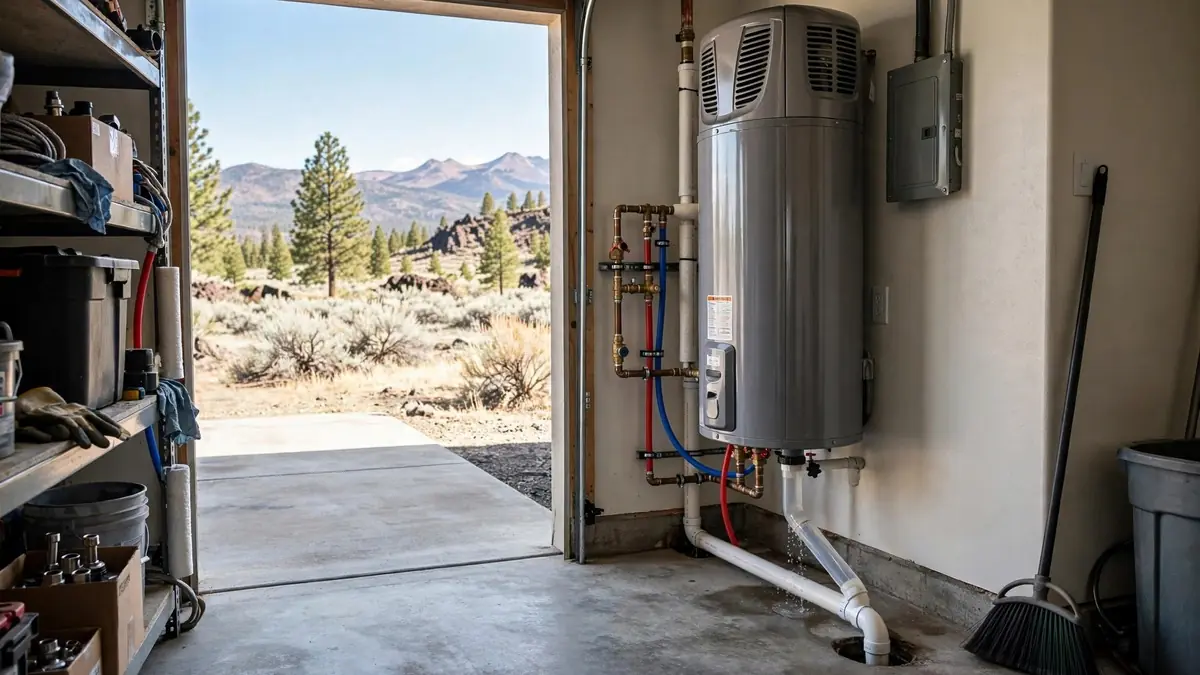
A heat pump water heater can cut electric water heating costs, but it needs the right space, a compatible fuel and a verified incentive. Energy Trust of Oregon has offered up to $1,200 for qualifying units, though rules change, so confirm eligibility before you buy.
What a heat pump water heater is
A heat pump water heater, sometimes called a hybrid, moves heat from the surrounding air into the tank instead of making all of it with a resistance element. It uses electricity, but a good deal less of it than a standard electric tank for the same hot water. It also cools and dries the air around it a little, which can be an advantage in a basement and a drawback in a cold living space.
The question for most Central Oregon homeowners is not whether the technology works. It is whether it fits the house, the fuel and the budget. The answer depends on where the heater sits, how much hot water the household uses and whether the home heats water with electricity or gas today.
Who it fits and who it does not
Cold matters here. A unit that is happy at 50 degrees may struggle in a garage that falls well below freezing on a January night. Check the manufacturer's stated operating range against your space.
| Your situation | Heat pump water heater? | Why |
|---|---|---|
| Electric tank in a garage or basement with room to breathe | Often a good fit | Biggest savings versus resistance heating |
| Electric tank in a small closet | Check airflow first | The unit needs air volume or ducting |
| Gas tank or tankless | Usually not the first choice | Fuel switch, and incentives often require an electric replacement |
| Very cold, unheated garage | Check the operating range | Efficiency drops and some units fall back to resistance heat |
| Large household with heavy simultaneous use | Size carefully | Recovery is slower than a gas or tankless unit |
Where the incentive stands
Energy Trust of Oregon, the nonprofit that serves customers of Oregon's investor-owned utilities, has offered incentives for qualifying heat pump water heaters. A May 2026 notice to its trade allies said residential customers could save up to $1,200 on qualifying units through its retailer and distributor program, intended for home retrofits rather than new construction.
Summaries of the program say the unit generally must replace a standard electric tank, and that instant incentives are paid through enrolled trade ally contractors. Pacific Power and Cascade Natural Gas are among the utilities Energy Trust serves, but which program applies depends on your address and fuel.
Amounts, tiers and rules change from year to year. Treat any number you read, including this one, as a starting point and confirm the terms with Energy Trust before buying. Ask your installer whether they are an enrolled trade ally, because claiming the incentive may depend on it.
Ask before you buy
Confirm three things with the program: whether your utility is covered, whether your current heater qualifies as the one being replaced, and whether the installer must be an enrolled contractor.
What the install needs
Items to check in the quote
- Clear floor space and enough surrounding air, or an approved duct arrangement.
- A condensate drain, since the unit removes moisture from the air.
- Electrical capacity, often a 240-volt circuit, sometimes with a 120-volt option.
- A permit and inspection, which the licensed contractor should handle.
- A relief valve discharge line and seismic strapping where code requires them.
- Clarity on noise, because the compressor and fan make some sound.
The cost picture
A heat pump water heater costs more than a standard electric tank, often by a thousand dollars or more before incentives, and the install may need extra work. The savings come from lower electricity use over the life of the unit. In a home with expensive electricity and a high hot water load, the payback can be reasonable. In a low-use home, it may be long.
Do the math with your own numbers: your electric rate, your household size and the installed quote. The water heater installation page covers sizing and what a written quote should show.
Living with one day to day
Most heat pump water heaters have several modes. A heat pump only mode saves the most energy but recovers slowly. A hybrid mode adds resistance heating when demand is high, and a high-demand or electric mode uses elements only. Many households run hybrid and switch to a faster mode when guests arrive.
The unit cools and dehumidifies the air around it, so a garage or basement stays slightly cooler and drier. That can be an advantage in a damp basement and a nuisance in a small heated space. It also pulls heat from the room, which can raise heating costs a little in winter if the room is inside the heated envelope.
Maintenance is light: clean the air filter every few months, flush the tank yearly if the manufacturer suggests it and check the condensate drain. A clogged condensate line can overflow, so confirm that it drains freely.
Sizing for a Central Oregon household
Hybrid units usually come in 50, 65 and 80 gallon sizes. A household of three or four typically does well with a 50 to 65 gallon unit, while larger families or those with soaking tubs may want 80 gallons or a second heater. Recovery in heat pump mode is slower than a gas unit, so a bigger tank compensates.
A plumber can size one using your fixtures and habits. Two people showering back to back and a dishwasher cycle are the pattern that tests a unit. If your household often exceeds that, a larger tank or a different type may serve you better.
When another type makes more sense
A gas tankless heater suits households that want unlimited hot water and have a gas supply. A standard tank is the lowest first cost. If your current heater is failing and a new one is urgent, you may not have time to wait for an incentive. A plumber can help you weigh the options in one visit.
If you are replacing a failing unit right now, water heater repair can tell you whether it can limp along until you choose. Homes in the Redmond area built in the early 2000s often have original tanks at the end of their life, which makes this decision common there.