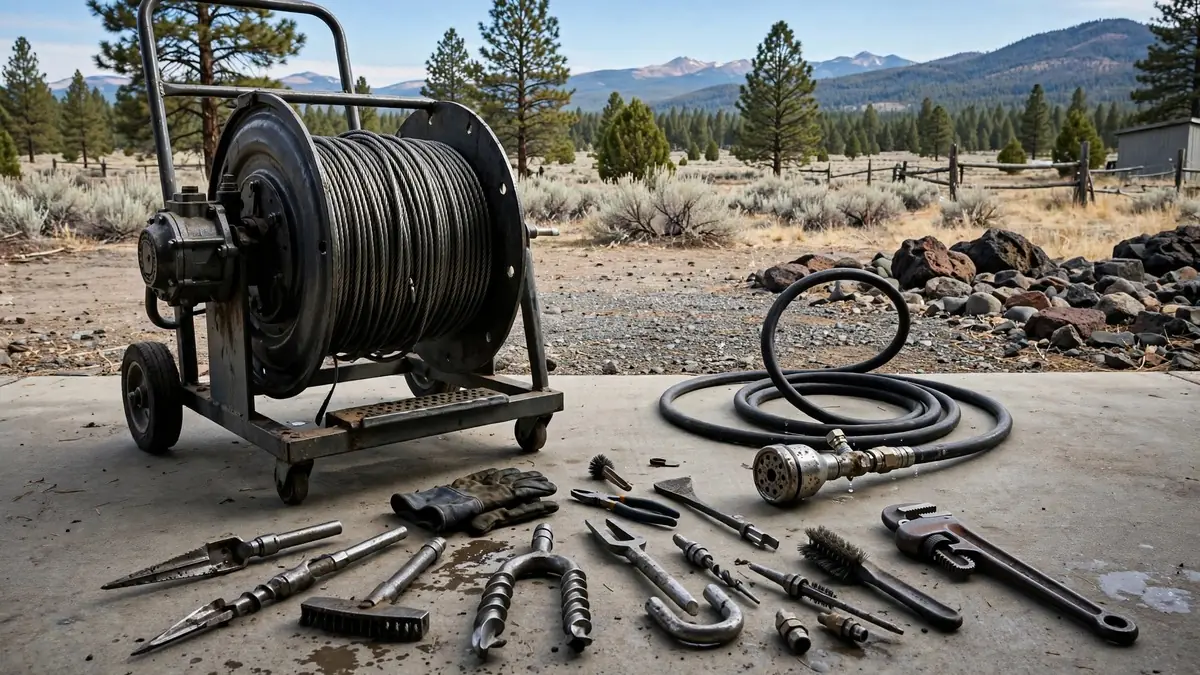
Snaking bores a hole through a clog, and hydro jetting scours the whole pipe wall with high-pressure water. A cable is enough for one-off clogs, while jetting suits grease, scale and roots that keep returning, after a camera confirms the pipe can take it.
The quick decision
A cable, or snake, bores a hole through a clog. A hydro jetter scours the whole inside of the pipe with high-pressure water. Cable is the right choice for most single-fixture clogs, and jetting is the better choice for grease, scale and roots that keep returning.
Neither is better in general. Which one fits depends on the pipe, the cause of the clog and how often it comes back. A plumber who offers only one tool will recommend it for every job, so the right question is what the camera shows.
How each method works
| Cable machine | Hydro jetting | |
|---|---|---|
| What it does | A spinning cutter or auger breaks through the blockage | A nozzle sprays high-pressure water along the pipe wall |
| Best for | Soft clogs, hair, paper, toy in a toilet trap | Grease, scale, sand and fine roots |
| What it leaves behind | Buildup around the hole it opens | A cleaner pipe wall |
| Risks | Can push a plug deeper or snag | Not for crushed, offset or fragile pipe |
| Typical result | Quick relief that may recur | A longer interval before the next clog |
Signs you need more than a snake
Red flags after a clog is cleared
- The same drain clogs again within weeks or months.
- A cable gets stuck partway down the line.
- Roots or grease come out on the cutter head.
- Multiple fixtures back up, not just one.
- Water drains slowly even though the cable passed.
- A restaurant or rental building sends fats and starch through the line daily.
Why a camera belongs in the conversation
Before jetting, a plumber should look at the pipe with a camera. Jetting can enlarge a crack in old clay, make an offset joint worse or break a fragile section. A responsible plumber who sees damage will stop and quote a repair rather than push high-pressure water into it, and any repair that follows is made to the Uniform Plumbing Code (UPC) as adopted in Oregon.
The camera also shows whether the pipe is the problem. A belly that holds water will clog again no matter how clean it is. A joint with roots entering needs repair, not just cutting. If the video shows these defects, the next step is sewer lateral repair, not another cleaning.
Who benefits most from jetting
Commercial kitchens and rental buildings are the classic cases. Fats, oils and starch coat pipe walls in layers, and a cable punches only a path through the middle. A landlord with a multi-unit building can book jetting once or twice a year and sidestep the between-tenant emergency calls, which the high-pressure jetting page also covers.
Even a busy household kitchen can justify it when the same branch line keeps needing the snake. The same applies to a house where grease has been poured down the drain for years. For ordinary clogs, a one-time visit from drain unclogging is enough.
What a visit looks like
A visit that skips the camera is a visit that guesses. Even a short look helps the plumber choose and gives you a record.
Cost and frequency
Cabling is the less expensive option for a single clog, and it is often the right first step. Jetting costs more because it needs more equipment, more water and more time, and it is usually priced after a camera inspection. The price rises with line length, pipe diameter and how heavy the buildup is.
Frequency depends on use. A busy restaurant kitchen might jet every three to six months. A rental building might do it once or twice a year. A single-family home rarely needs routine jetting and should treat it as a fix for a recurring problem, not as a calendar chore.
If you are paying for repeated cabling and the clog keeps returning, the total of those visits may exceed one jetting job. Do the math with your own history before choosing.
Mistakes people make
- Pouring chemical drain cleaner down a line that will need to be cabled, which burns the plumber and the pipe.
- Snaking the same line over and over without a camera.
- Jetting a line with known cracks or offsets.
- Ignoring the cleanout and having the plumber pull a toilet instead.
- Assuming a clear drain means the problem is solved, when the cause is a sag or a root entry.
Questions to ask before you approve jetting
Put these to the plumber
- Will you run a camera first, and can I see the video?
- What does the video show about the condition of the pipe?
- What pressure and nozzle will you use for this pipe size and material?
- How will you contain the water and debris at the access point?
- Will you run a second camera pass after jetting?
- What do you recommend if the pipe turns out to be damaged?
Keeping the line clear afterward
A jetted line starts clean, and habits decide how long it stays that way. In a kitchen, wipe greasy pans with a paper towel before washing, scrape plates into the trash and use a strainer in the sink. Hot water alone does not move grease far, because it cools and hardens further down the pipe.
For a rental or a business, a simple schedule works better than waiting for a backup. Pick an interval based on the first few months of use, and ask the plumber to note the condition of the line on each visit. If the video shows heavy buildup after only a few months, shorten the interval. If it shows clean walls after a year, lengthen it.
Keep a log of dates, locations and what the camera found. The log shows trends, and trends are what tell you when a line is aging and a repair is cheaper than another cleaning.
What happens after cleaning
Whichever method clears the line, the habits that caused the clog still apply. A sink strainer in the kitchen, a rule against grease and wipes, and a yearly check on a problem line prevent more calls than any chemical. Hydro jetting does not make a drain immune, only cleaner.
In places like Redmond, where a lot of homes and businesses were built in the same decades, similar clogs show up on the same streets. A plumber who sees a pattern can often suggest the right interval for maintenance.
Jetting prices depend on line length, pipe size and the camera work. Ask for a written quote and a copy of the before and after video.