Call a plumber for pipes inside the house and a DEQ-licensed septic professional for the tank and drain field. Oregon licenses septic pumping and installation separately from plumbing, so a plumber can clear a house drain but cannot pump your tank.
The short answer
A plumber handles pipes. A septic professional handles the tank. When a drain backs up in a house on septic, the first job is to work out which side the problem is on. The house plumbing runs from your fixtures to the tank, and the tank and drain field are the septic system.
Oregon treats septic work as its own licensed trade. The Department of Environmental Quality requires a sewage disposal service license for anyone pumping a septic tank or installing parts of a septic system. A plumbing license does not cover it. That is why a plumber can clear a house drain and still send you to someone else for the tank.
Which problem belongs to whom
If the sewer smell is in the yard rather than the house, assume it is the septic side until proven otherwise.
| Problem | Start with | Why |
|---|---|---|
| One slow sink or tub | Plumber | Branch-line clog in the house |
| All drains slow, gurgling, backing up | Plumber first, then septic if the tank is full | Main line or tank outlet, which a camera or cable test tells apart |
| Sewage surfacing in the yard | Septic professional | Drain field or tank failure |
| Septic alarm sounding | Septic professional | High water level in the tank or pump chamber |
| Sewage backing up in a house on city sewer | Plumber | Lateral or main blockage |
| Tank due for pumping | DEQ-licensed septic pumper | Pumping is a licensed service |
How to tell if you are on septic or sewer
Quick ways to find out
- Look at your utility bills: a sewer charge usually means city sewer.
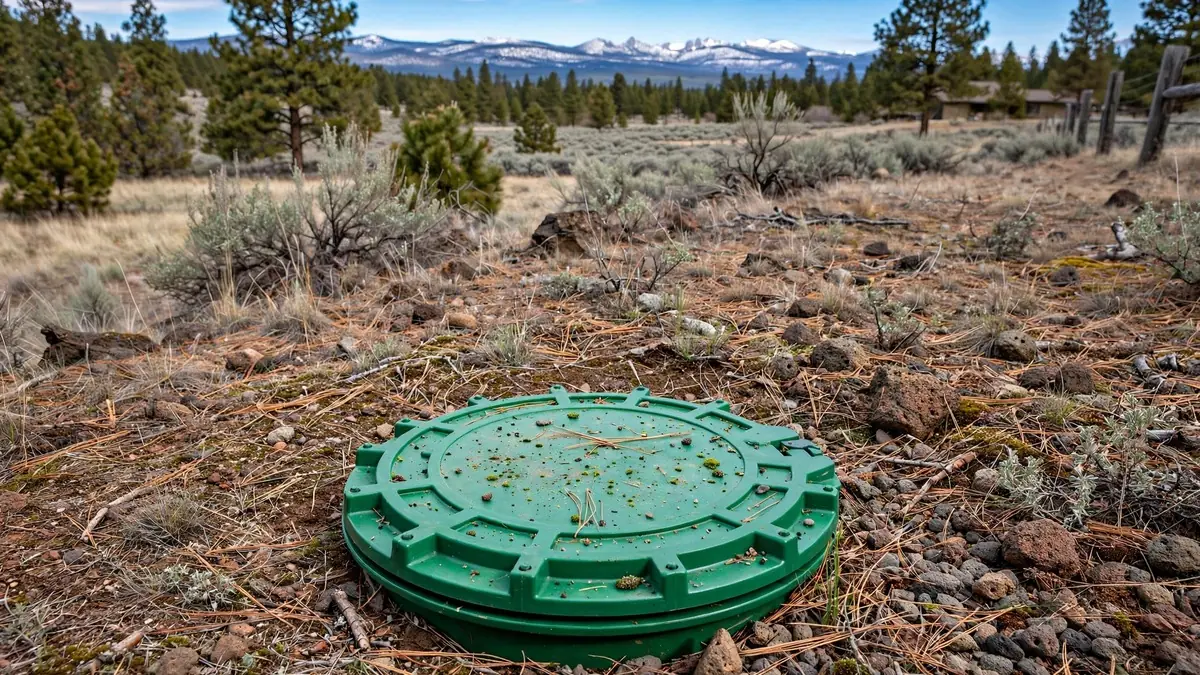
- Walk the yard for a lid or a green marker covering the tank and risers.
- Check your property records or ask the county for the septic permit.
- Ask a neighbor with a similar house, though the answer may differ lot to lot.
- In Bend, ask the city whether your street has sewer service and whether your property has been connected.
What Deschutes County expects from septic owners
Deschutes County runs an operation and maintenance program for onsite systems. Its guidance says a tank should be pumped when solids fill about a third of its capacity. It notes that a standard thousand-gallon tank is approved for up to a four-bedroom home. Some systems must also have a service contract with a DEQ-certified maintenance provider, who submits an annual report to the county.
In plain terms, a septic tank needs regular inspection, pumping and care. The rules depend on your type of system. If you are unsure which apply, call the county's onsite wastewater division, which can tell you what your permit requires.
What not to put down a septic drain
The tank relies on bacteria to break down waste. Chemicals kill them, and solids that do not break down fill the tank sooner.
- Wipes, even those labeled flushable.
- Grease, fats and cooking oil.
- Coffee grounds, eggshells and food scraps from a heavy disposal habit.
- Paint, solvents, drain chemicals and large amounts of bleach.
- Anything non-biodegradable, such as feminine products and dental floss.
Warning signs a septic system is failing
A failing septic system is a health hazard because sewage contains disease-causing organisms. Keep children and pets away from wet areas, stop using water if sewage is surfacing and call a licensed septic professional.
- Drains throughout the house run slowly or gurgle, not just one fixture.
- Sewage odors in the house or the yard, especially near the tank or drain field.
- Wet, spongy or unusually green ground over the drain field.
- Sewage backing up into the lowest drain.
- An alarm on a pumped system, which signals high water in the pump chamber.
Buying or selling a home on septic
In Deschutes County, septic systems are evaluated during many property sales. The county's onsite wastewater division can tell you what records exist for a property, including the original permit, repair records and any maintenance agreement. Ask for them.
A buyer should have the tank inspected and pumped by a licensed professional before closing and should ask how old the system is. Ask whether the home was ever converted from sewer or septic, and request documentation if a tank was decommissioned.
A seller who has kept pumping receipts and inspection reports gives buyers confidence. Those records are worth collecting now, whether or not a sale is planned.
Planning for septic costs
Septic systems carry costs that sewer customers do not. Regular pumping is the most predictable one, and the interval depends on tank size, household size and use. A maintenance contract with a certified provider, where the county requires one, adds a yearly fee.
Repairs range widely. Replacing a baffle or a pump is modest, while replacing a drain field is among the largest expenses a homeowner can face. The best protection is care: pump on schedule, keep records and watch for the warning signs listed above.
Sewer customers pay a monthly utility charge instead. Neither is free, and neither is better in every case. If you are weighing a conversion from septic to sewer, ask the city for the cost of connection and the private plumbing work, and compare it with your septic costs.
Bend's septic-to-sewer conversions and what changes
Some Bend neighborhoods have been connected to sewer through a city conversion program. When that happens, the owner or hired contractor decommissions the septic tank and connects the house plumbing to the sewer stub-out. Decommissioning matters: an abandoned tank that is not properly filled or removed can collapse. If you bought a house that was converted, ask for the paperwork.
After conversion, the house is a sewer house, and the plumber handles drain problems in the usual way. The drain cleaning page explains the first steps for a clog, and the sewer backup page covers what to do when sewage is rising.
In rural areas such as La Pine and Tumalo, septic systems remain common, and the right first call depends on the symptom.