Hose Bib & Outdoor Faucet Repair in Bend, OR
Repair or replace dripping and freeze-damaged outdoor faucets, and set them up to survive the next winter.
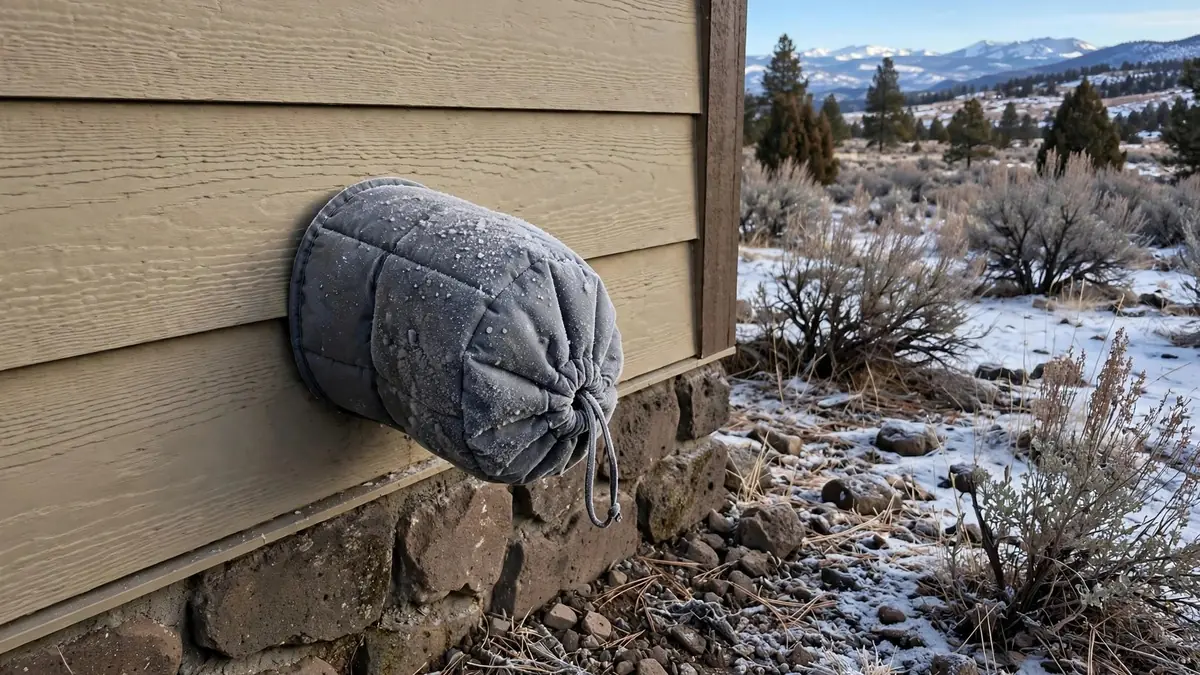
A hose bib calendar for Central Oregon
Early fall
Test every spigot and note any that drip when closed.
Before the first freeze
Disconnect hoses and drain and cover each bib.
Mid winter
Check the wall inside for dampness near the pipe.
Spring
Turn on slowly and watch for leaks inside the wall.
Most hose bib failures show up in spring, when the water is turned back on, but the damage was done in January.
Common outdoor faucet problems
| Problem | Likely cause | Typical fix |
|---|---|---|
| Drip from the spout | Worn washer or seat | Replace the washer or the stem |
| Leak around the handle | Worn packing | Tighten or replace the packing |
| Water inside the wall in spring | Frozen and split pipe behind the faucet | Replace the bib and the damaged section |
| Water from the vacuum breaker cap | Normal during use, or a worn breaker | Replace the breaker if it leaks when closed |
| Handle will not turn | Corrosion or mineral buildup | Replace the faucet |
| Spigot loose on the wall | Fitting wear or rot behind siding | Remount and reseal, repair the wall |
A drip you can see is annoying. A leak inside the wall rots framing quietly, so check the interior side too.
How a frost-free spigot actually works
The long barrel
A frost-free hose bib has a valve at the inner end of a long tube, so the water stays inside the heated part of the wall. When the faucet is shut, water drains out of the tube and the pipe stays empty in the cold.
The tube has to slope slightly downward toward the outside. If it is level or slopes inward, water stays in the barrel and can freeze regardless of the label.
The hose is the usual cause
A hose left connected traps water in the barrel, even on a frost-free model. That water freezes and splits the pipe behind the wall. This is the single most common reason a good spigot fails.
A vacuum breaker on the spigot also protects the drinking water from backflow, which matters for the rules covered in backflow testing.
Winter prep that takes ten minutes
Before you stash the hoses for winter
- Disconnect every hose and splitter, and store them indoors.
- Close the indoor shutoff to the hose bib if there is one, then open the outdoor spigot to drain.
- Fit an insulated cover over each spigot that sits in an exposed spot.
- Check the slope of any frost-free bib. A level one needs correction.
- Make a note of any bib that dripped all summer, and fix it before winter.
What replacing an outdoor faucet involves
Replacing a hose bib is a short job when the pipe behind it is sound. The plumber turns off the water, removes the old faucet, cleans the connection and fits a new frost-free model with a vacuum breaker. A pressure test follows.
If the pipe has split, the work extends to cutting out the damaged section, which may require opening a small section of wall. A split that leaks inside the wall is a bigger repair and can overlap with split pipe repair.
New work must meet the Oregon Plumbing Specialty Code, built on the Uniform Plumbing Code (UPC), which requires a backflow device on hose connections.
What changes the price of a hose bib job
Insurance may cover water damage from a sudden burst but not wear. Photograph the pipe and the wall before cleanup.
Outdoor faucet service across the region
Calls come from Bend, Sunriver and Sisters. Vacation homes in particular benefit from a fall visit, since no one is around to notice a drip before a freeze.
Spigots on north walls of homes around Pilot Butte and on exposed west-side builds in NorthWest Crossing are the ones that split first in a hard freeze. Disconnect hoses before the first cold night and book a spring check once the water is back on.
Hose bib questions in Bend
A hose left connected during a freeze can split the pipe behind the faucet. The leak shows when you turn the water on in spring.
Yes, at least by disconnecting the hose. The faucet still needs a downward slope and an empty barrel.
A frost-free bib has a long barrel through the wall and a valve inside. If water continues to drip for a few seconds after you close it, it is usually frost-free.
Often yes, if the pipe behind it is sound. A split pipe needs access.
A small drip is not. Water inside the wall is.
Code requires a backflow device on hose connections. Most modern bibs have one built in.