Tankless Water Heater Service in Bend, OR
Diagnosis, flushing and repair for on-demand heaters that throw codes or run cool.
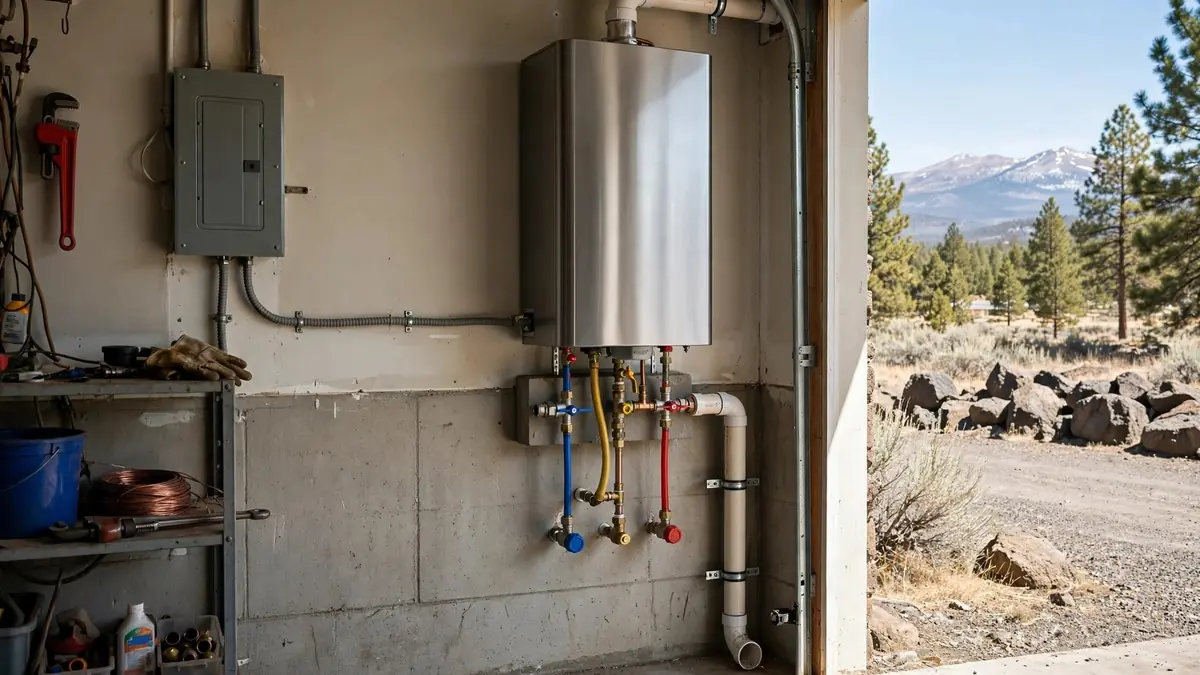
Your tankless heater is throwing codes or running cool
People call for tankless service for a few reasons. An error code shows on the display, hot water comes and goes, or the unit has gone years without a flush. Most of these trace back to scale, a restricted vent or intake, or a clogged inlet filter.
A tankless heater holds far less water than a tank, so small restrictions show up quickly. Soft city water in Bend slows scale. Private wells can build it much faster, and the heat exchanger is the first place it shows. The only way to know is to inspect the heat exchanger and flush the unit.
Tankless water heater service in Bend covers diagnosis, descaling, filter cleaning, vent and intake checks and a combustion test on gas units. If the unit is beyond repair, tank replacement lays out the options.
What common tankless problems usually mean
| Symptom | Likely cause | What the service does |
|---|---|---|
| Error code on display | Ignition, flow, vent or temperature fault | Read the code, then test the part it points to |
| Lukewarm water | Scale on the heat exchanger or low flow | Flush with descaler, clean filters |
| Hot water cuts out mid-shower | Flow below the minimum, or safety shutoff | Check flow, filters and gas pressure |
| Unit cycles on and off | Restricted flow or faulty sensor | Test sensors and clear screens |
| Noise or vibration | Scale, loose vent or failing fan | Descale, tighten vent, check blower |
Specific codes vary by brand, so the plumber works from the manufacturer's code list for your model.
What a flush and descale actually involves
Isolate the unit
Service valves are closed and the heater is drained.
Circulate descaler
A pump runs a descaling solution through the heat exchanger.
Rinse and clean filters
The system is flushed and inlet screens are cleaned.
Test and verify
Flow, temperature and combustion are checked.
The job is simple if the unit has isolation valves. If it does not, the plumber can add them, which makes every future flush faster.
Winter, gas supply and siting
Cold incoming water
In winter, water entering the house is much colder than in summer, and the unit has to heat it further. A heater that handles two showers in July may struggle with them in January because the flow it can deliver falls as the temperature rise grows.
If your hot water fades only in winter, the unit may be undersized for cold weather, not faulty. A service call should include a flow and temperature test.
Gas lines and venting
Gas tankless units use a lot of fuel at once. A gas line that was fine for a tank may be too small, which shows up as ignition faults when other appliances run. Vents also need the right slope, clearance and condensate drain for condensing models.
These are code matters under the Oregon Plumbing Specialty Code, built on the Uniform Plumbing Code (UPC), and an installer should confirm them at every service.
Gas and carbon monoxide checks before any service
What to do if something seems wrong
- If you smell gas, leave the building and call 911 or the gas utility from outside. Do not operate switches or phones inside.
- Make sure working carbon monoxide alarms are installed near sleeping areas and the heater, and test them monthly.
- Never block the vent or intake, and keep stored items and chemicals away from the unit.
- If a carbon monoxide alarm sounds, get everyone outside first and call for help from there.
- Have gas connections and combustion checked by a licensed plumber, not tested with flame or guesswork.
Keeping a tankless heater healthy
A simple yearly routine
- Flush the unit annually, or as the manufacturer states, more often on well water.
- Clean the inlet water filter and the cold water screen.
- Check the vent and intake for blockage, nests and ice.
- Test the condensate drain on condensing models.
- Record the date and the settings so the next visit can compare.
What changes the price of tankless service
Routine tankless service is maintenance, which insurance does not cover. Keep the service record, since many manufacturers ask for it when you make a warranty claim.
Tankless service across the Bend area
Tankless visits are booked across Bend and in Redmond, usually grouped by neighborhood to keep scheduling tight. For a tank heater instead, tank water heater repair is the matching page, and homes on wells may want to review filter system installation to protect the heat exchanger.
Tankless units in Tetherow and NorthWest Crossing homes face the same Bend altitude and gas supply limits as any other. A yearly flush matters most where the water is hard, which is why the first call is often a descaling visit.
Tankless water heater questions in Bend
At least once a year for most homes, and more often on well water or if you see lukewarm output. Follow the manufacturer's schedule for your model.
Codes point to a fault in ignition, flow, venting or temperature sensing. The plumber reads the code against your model's list and tests the part.
Yes. Scale and filter clogs are the main reasons they fail early, and a flush is the main prevention.
Colder incoming water means the heater must work harder. If the unit is near its limit, flow drops. A service visit can test whether it is sized correctly.
Most gas and electric tankless units are serviceable. Tell dispatch the brand and model so the right parts and code list are ready.
No hot water in winter is urgent. A scheduled flush is not.
Tankless heater acting up?
Call to book a flush, or for help when the hot water is out.
Call (503) 974-3329