Toilet Repair & Installation in Bend, OR
Running toilets, leaking bases, weak flushes and full replacements handled properly.
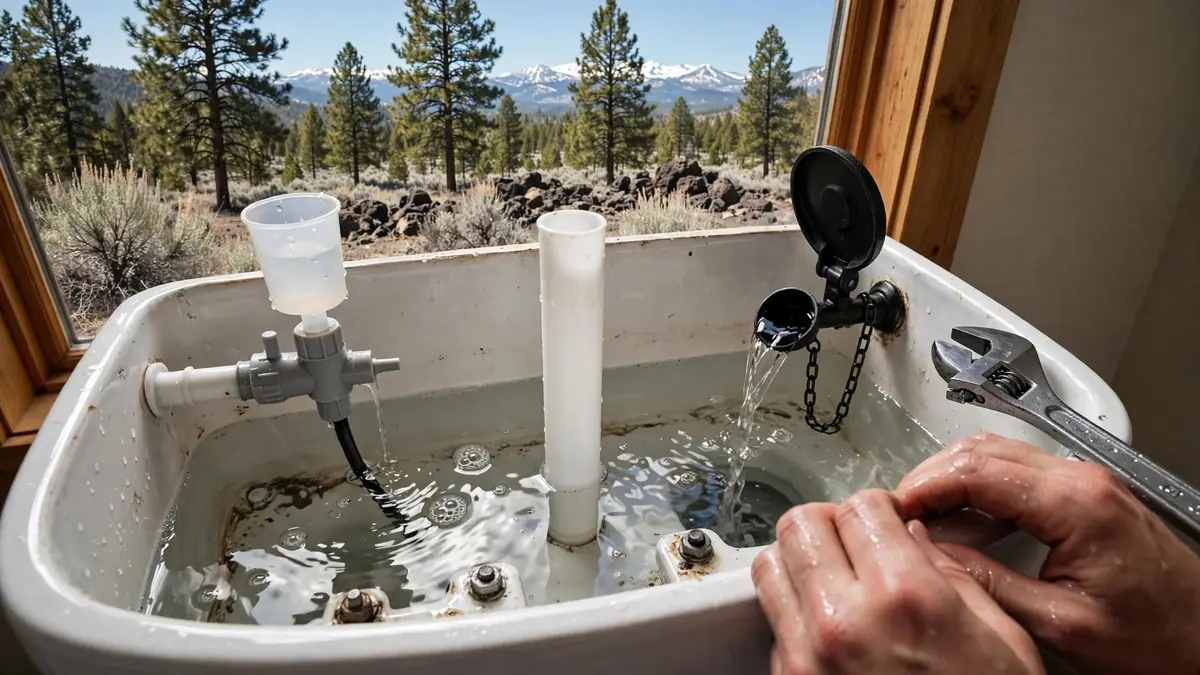
Stop a toilet overflow in thirty seconds
Lift the tank lid
Push the flapper down to stop more water entering.
Close the stop valve
Turn the valve behind the toilet clockwise.
Do not flush again
Wait for the water to settle.
Call if it persists
A repeat overflow may be a main line clog.
An overflow that stops after the valve is closed is a toilet problem. One that keeps coming back, or backs up other drains, is a drain problem.
What each toilet symptom usually means
| Symptom | Likely part | Typical repair |
|---|---|---|
| Toilet runs after flushing | Worn flapper or fill valve | Replace the part, a quick job |
| Phantom flush every few minutes | Flapper leaking slowly | Replace the flapper and check the seat |
| Water around the base | Failed wax ring or loose bolts | Pull the toilet and reset with a new ring |
| Weak flush | Clogged rim jets or low water level | Clean jets and adjust the fill |
| Wobbling toilet | Loose bolts or a damaged flange | Re-secure or repair the flange |
| Cracked bowl or tank | Age or impact | Replace the toilet |
Most running toilets are fixed with a part costing a few dollars. The labor is where plumbers charge, so a wise homeowner tries the flapper first.
Why leaks at the base are a bigger deal than they look
The wax ring seals the toilet outlet to the drain flange in the floor. When it fails, wastewater escapes at the base with each flush, soaks the subfloor and can rot wood before any stain appears. A faint odor or a soft spot around the toilet is a signal to act.
Replacing a wax ring means draining and lifting the toilet, cleaning the flange and setting the toilet on a new seal. If the flange itself is cracked or set too low, a repair ring or a new flange is needed.
If the subfloor is already damp, a plumber can check the extent. Leaks at the toilet can overlap with hidden leak detection when the water is traveling to a ceiling below.
Choosing and installing a new toilet
What to buy
Measure the rough-in, the distance from the wall to the center of the drain, which is commonly 12 inches. Choose a bowl shape and height that suit the household. A WaterSense-labeled toilet uses no more than 1.28 gallons per flush and is the typical choice for new installs.
Flush performance varies more between models than the label suggests. Independent flush tests are worth a look before buying.
What installation includes
The plumber removes the old toilet, inspects and cleans the flange, installs a new seal, sets and levels the toilet and connects a new supply line. A leak check follows.
Installation follows the Oregon Plumbing Specialty Code, built on the Uniform Plumbing Code (UPC), which sets clearances and flush volume limits.
Special cases outside city sewer
Houses on septic systems are more sensitive to what goes down the toilet. Wipes, even those labeled flushable, do not break down in a tank. A slow toilet in a septic home should be checked before it becomes a backup. If the toilet is flushed and the drain is the problem, drain clearing is the next step.
On a well, a running toilet wastes water the pump had to lift and can make the pump cycle more often. Fixing the flapper protects the pump as well as the bill.
What decides toilet repair and install pricing
Insurance may cover damage from a sudden overflow but not slow leaks at the base. Photograph any damage before repairs.
Toilet service across the region
Toilet calls come from Bend, Redmond and Sisters. For a related fixture problem in the same room, faucet and sink repair covers the vanity, and a tub or shower update is in shower and bathtub installation.
Toilet swaps range from low-clearance bathrooms in older Old Bend houses to taller comfort-height installs in new NorthWest Crossing builds. Tell the plumber the rough-in distance if you know it, or the model, so the right toilet is on the truck.
Toilet repair questions in Bend
Usually a worn flapper or a failing fill valve. Both are inexpensive parts and a quick repair.
Water or odor at the base, a rocking toilet or a soft floor around it are the signs.
A running or leaking toilet is usually worth repairing. A cracked bowl or a toilet that clogs constantly is better replaced.
Yes. Make sure the rough-in matches and that all parts are in the box.
Yes. The emergency line is open 24 hours. Shut the stop valve first.
A WaterSense toilet uses no more than 1.28 gallons per flush.