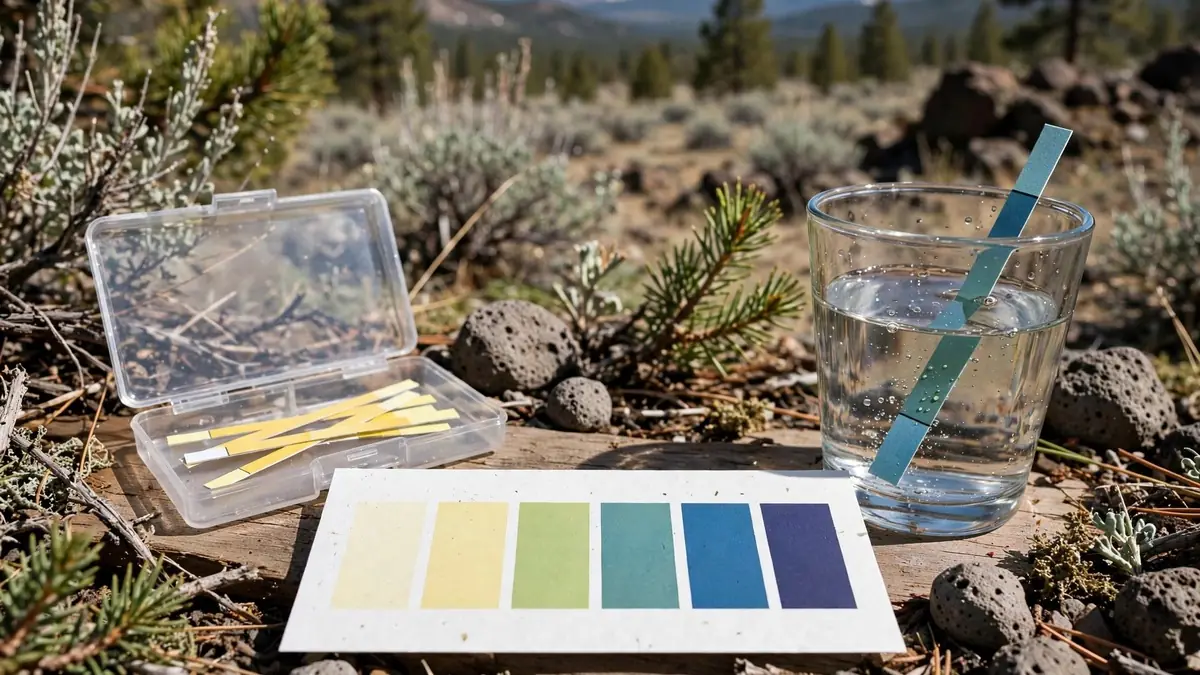
Bend city water is not hard. Per City of Bend figures, ordinary tap water here lands around 1 to 1.5 grains per gallon, which is soft to slightly hard. Private wells and some other systems can read higher, so test your own source before you buy a softener.
What the city reports
The City of Bend says its water usually falls between 0.99 and 1.46 grains of hardness per gallon, which it describes as soft to slightly hard. That is far below the point where most households bother with a softener.
The city also notes that its water comes from groundwater that has filtered through volcanic rock, sand and gravel, and it tests the supply thousands of times a year. The volcanic setting is real, but the hardness numbers are what matter for plumbing, and they are low.
Where the hard-water talk comes from
You will see 'hard water in Central Oregon' in a lot of marketing, much of it written for the region as a whole. The statement is easy to repeat because Central Oregon sits on volcanic geology and because some private wells and some neighboring systems do read higher.
The problem is that a regional line says little about your tap. Water hardness depends on the source: a city system, a community system, or a private well each have their own number. Treating the whole region as hard, and selling equipment on that basis, is how households end up with softeners they never needed.
A better habit is to ask for a number. Hardness is measured in grains per gallon or milligrams per liter, and any provider or lab can report it.
What the numbers mean
The city's own figure of 0.99 to 1.46 sits at the soft end of this scale and just into the slightly hard band. According to the City of Bend, it uses the hardness classes of the U.S. Department of the Interior and the Water Quality Association, and the table above follows that standard. For most homes, nothing needs treating.
| Grains per gallon | Category | What it usually looks like |
|---|---|---|
| Under 1 | Soft | No scale, soap lathers easily |
| 1 to 3.5 | Slightly hard | Little visible scale |
| 3.5 to 7 | Moderately hard | Spotting on dishes, some scale on fixtures |
| 7 to 10.5 | Hard | Noticeable scale on heaters and faucets |
| Over 10.5 | Very hard | Heavy scale, shorter appliance life |
City water, Avion water and wells
Not every Bend address is on city water. Avion Water Company serves parts of the area from deep wells drilled into basalt, and says its water is delivered untreated. Properties outside both systems often use private wells, and those vary the most.
Check your bill. A water bill from the City of Bend or Avion tells you who to ask for a report. If you have no bill, you probably have a well, and a lab test is the only real answer. A well test costs little compared with a softener.
The same logic applies in the other towns around Bend. The city of Sisters, for example, says its groundwater is filtered through basalt and needs only a small amount of chlorine. Each system is different, which is why the number from your own source matters. The page for Sisters covers that town's setup.
Signs that scale really is a problem
Notice what is not on the list: dry skin, dull hair and the feel of the water. Those complaints have many causes, and none of them proves hardness. A number does.
- White crust on faucet aerators and showerheads that returns within weeks.
- A water heater that rumbles or pops soon after being flushed.
- Spotty glasses and a film in the dishwasher even with rinse aid.
- A tankless heater that throws scale-related codes.
- A test result or provider report above about 7 grains per gallon.
How to get your own number
The easiest source is your provider. The City of Bend publishes hardness figures with its water quality information, and Avion Water Company posts its own reports. Both are free to read. If you are on a private well, there is no report, and you need a sample tested.
Home test strips give a rough reading in a minute and cost a few dollars. They are fine for a first look, but they are coarse, and a reading near a category boundary deserves a lab test. A lab report gives a precise figure in grains per gallon or milligrams per liter, and often lists iron, pH and other minerals that matter for equipment choice.
Take the sample from a cold tap that has not passed through a softener or filter, after running the water for a minute. If your house has treatment equipment already, ask the lab how to sample before and after it.
Myths that sell softeners
Ask any seller for the hardness reading they are working from. If they cannot give one, they are guessing.
- Dry skin and dull hair mean hard water. They have many causes, including low winter humidity, and a hardness number is the only way to tell.
- All volcanic regions have hard water. Hardness depends on the aquifer and the minerals it contacts, and Bend's city figures are low.
- A softener always extends appliance life. It does where scale is the problem. In soft water, it adds salt and maintenance for little benefit.
- A salt-free conditioner is the same as a softener. It changes how scale forms but does not remove the minerals.
Hardness and your water heater
Scale insulates the heating surface of a tank or a tankless unit and forces it to work harder. In hard water, a tank can lose efficiency and lifespan within a few years. In soft water, the effect is slow. Annual flushing keeps sediment from building up, and checking the anode rod every few years extends tank life.
If you are on a private well and your reading is above about 7 grains per gallon, a water heater can benefit from a softener upstream. For a home on city water, flushing is enough.
What to do with the result
If your reading is soft or slightly hard, spend nothing. An annual water heater flush and an occasional aerator cleaning handle the sediment that any water leaves behind. If your reading is high, a softener can pay for itself in longer appliance life, and the water softener installation and repair page explains what a proper installation includes.
If your concern is taste, chlorine or a contaminant rather than hardness, softening is the wrong tool. Filtration is a separate question, and water filtration installation explains why a lab test comes first.
Homes in the Tumalo area often rely on wells or shared systems, so the answer there is always a test. See the Tumalo page for how those setups work.