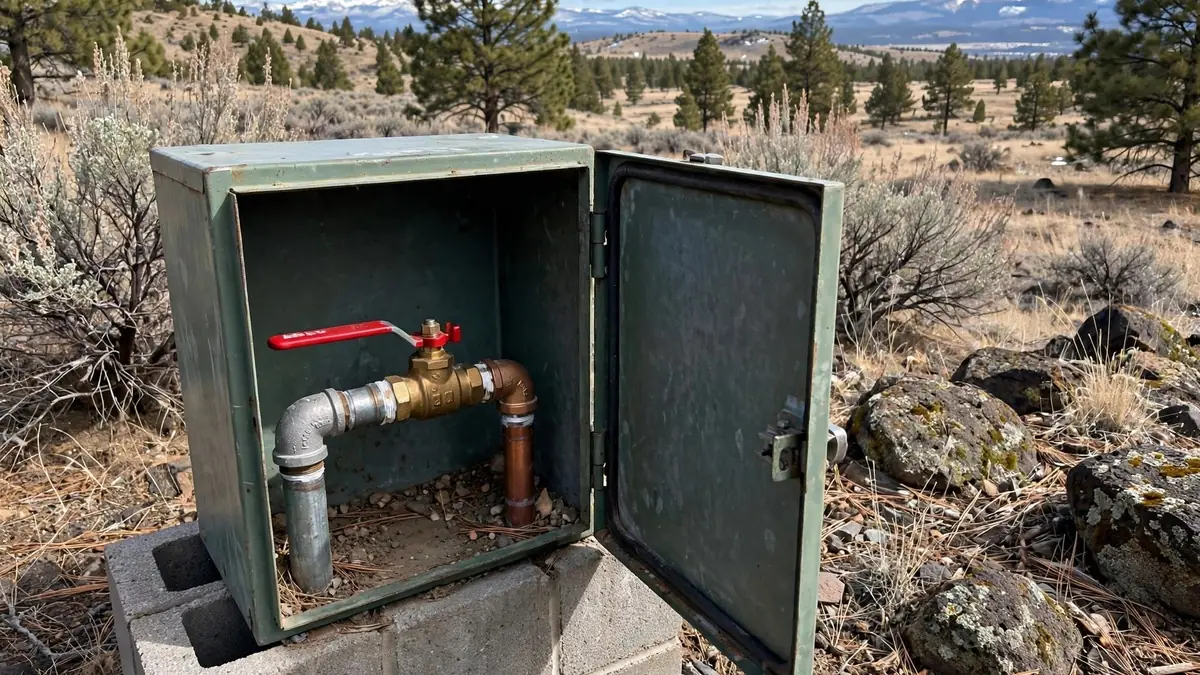
In a plumbing emergency, shut off the water first: the main valve for a burst pipe, the fixture stop for a single leak. Then deal with power, the water heater and photographs. If you smell gas, leave the building and call from outside.
The order that limits damage
Water first is the rule. Everything else is secondary to stopping the source. If you cannot find the main, close the stop valve at the fixture that is leaking, and call.
Find these valves before you need them
Most homes have three shutoffs worth knowing: the main water valve, the stop valves under each fixture, and the water heater's cold supply valve. The main is usually where the water line enters the house, which in Central Oregon is often the garage, a utility closet, a crawlspace hatch or the basement. Some homes also have a meter box at the street with a second valve.
Plumbing code, built on the Uniform Plumbing Code (UPC), calls for an accessible main shutoff, so you should be able to reach yours without moving anything. Test the main once a year.
Turn it off and on, and note whether it moves freely. A valve that has not been touched in a decade may be stuck, and you do not want to learn that during a flood. If it is a gate valve with a round handle, it may fail and should be replaced with a ball valve with a lever, a quick job for a plumber.
What to shut off for each problem
The gas line is the exception. If you smell gas, do not try to find a valve. Leave and call from outside.
| Problem | First valve | Then |
|---|---|---|
| Burst or split pipe | Main water valve | Open a low faucet to drain the line |
| Leaking toilet or sink | Fixture stop valve | Main if the stop will not close |
| Leaking water heater | Cold supply to the heater | Power or gas off, main if needed |
| Washing machine hose burst | Machine's two supply valves | Main if they will not close |
| Sewage backing up | Stop using water | Keep people away, call |
| Smell of gas | Leave the building | Call 911 or the gas utility from outside |
Safety around electricity
Water and power do not mix
- Do not step into standing water if outlets, cords or appliances are submerged.
- If you can reach the panel without wading, switch off the breakers for the wet area.
- If you cannot reach it safely, call for help and wait outside the wet area.
- Do not use a regular vacuum on water.
- Do not use space heaters or extension cords on wet floors.
- Wait for confirmation before restoring power to wet circuits.
Document for your insurer
Photographs and video are the best evidence you will have. Shoot wide shots of each affected room, then close-ups of the source and the damage. Include ceilings, baseboards and the floor. Write down the time you found the problem and what you did.
Keep damaged materials until your insurer has seen them or has told you in writing that you can dispose of them. A burst pipe section is often needed to show the cause. Save receipts for repairs and for any emergency purchases.
If the water soaked walls or floors, it is also worth calling a drying service quickly. The water damage restoration page explains that stage and who to call, and its phone line is separate from the plumbing line.
A plan for renters and landlords
If you rent, ask your landlord where the main valve is, and who to call in an emergency. Many leases require tenants to report leaks promptly, and closing a fixture stop is usually within a tenant's responsibility. Keep the landlord's after-hours number and the building manager's number somewhere you can find them at night.
Landlords should give tenants a one-page sheet with the main valve, the water heater shutoff and the electrical panel. For a building with several units, label each unit's shutoff. A tenant who can stop a leak in two minutes saves the owner thousands of dollars in damage.
A landlord should also test shutoffs yearly and replace stuck valves. A main that will not close in an emergency turns a repair into a restoration project.
After the water stops
Once the source is closed, move quickly on drying. Remove standing water you can safely reach, open windows and cabinets for airflow and run fans if the power is safe. Wet drywall and carpet padding hold moisture and become a mold risk if left for days.
Call your insurer and ask what they require. They may want a restoration company to document and dry the structure, and they may have preferred vendors. Keep receipts for emergency repairs, as most policies expect you to prevent further damage.
When the plumber arrives, tell them everything you did and when. The order of events helps them find the cause and gives your insurer a clear timeline.
Mistakes that make an emergency worse
- Looking for the cause before shutting the water off.
- Wading into standing water near outlets and cords.
- Using a torch or an open flame to thaw a frozen pipe.
- Forcing a stuck valve until it breaks.
- Throwing away wet materials before photographing them.
- Leaving the water heater on when it is leaking or the house is flooded.
- Waiting until morning to call because the leak seems small.
Pre-emergency preparation
A short list on the refrigerator beats a frantic search. Write down where the main valve is, where the water heater shutoff is, the electrical panel location and the plumber's number. Tell everyone in the house, including teenagers and guests in a rental.
Check hoses on the washing machine and the dishwasher every year. Rubber hoses crack, and braided stainless hoses last longer. Replace the toilet and sink supply lines when they show wear, and consider a leak sensor under the water heater and sinks.
For a vacation property in the Sunriver area, where nobody is around to notice a problem, a water-flow sensor on the main can send an alert or shut the water off. Details on the kinds of emergencies that happen most are in burst line repair and hidden leak detection.