Water Damage Restoration in Bend, OR
Water removal, structural drying and cleanup after a pipe failure, overflow or backup.
Not all water damage is the same, and the type decides the job
| Category | Typical source | What it means for cleanup |
|---|---|---|
| Category 1, clean | Broken supply line, tub overflow, rainwater entering from above | Dry the structure quickly, since most materials can be saved |
| Category 2, gray | Washing machine or dishwasher discharge, sump overflow | Cleaning and sanitizing plus drying, with some porous materials removed |
| Category 3, black | Sewage backup, rising groundwater or river water | Contaminated, so porous materials are removed and everything is sanitized |
| Water that sat over time | Any category left wet for days | Can move to a higher category as bacteria and mold grow |
The industry's published reference, the ANSI/IICRC S500 standard for professional water damage restoration, uses these categories and describes how each is handled. A restoration company should be able to tell you which one your loss falls under and why.
From standing water to a dry, repaired structure
Removing the water and drying
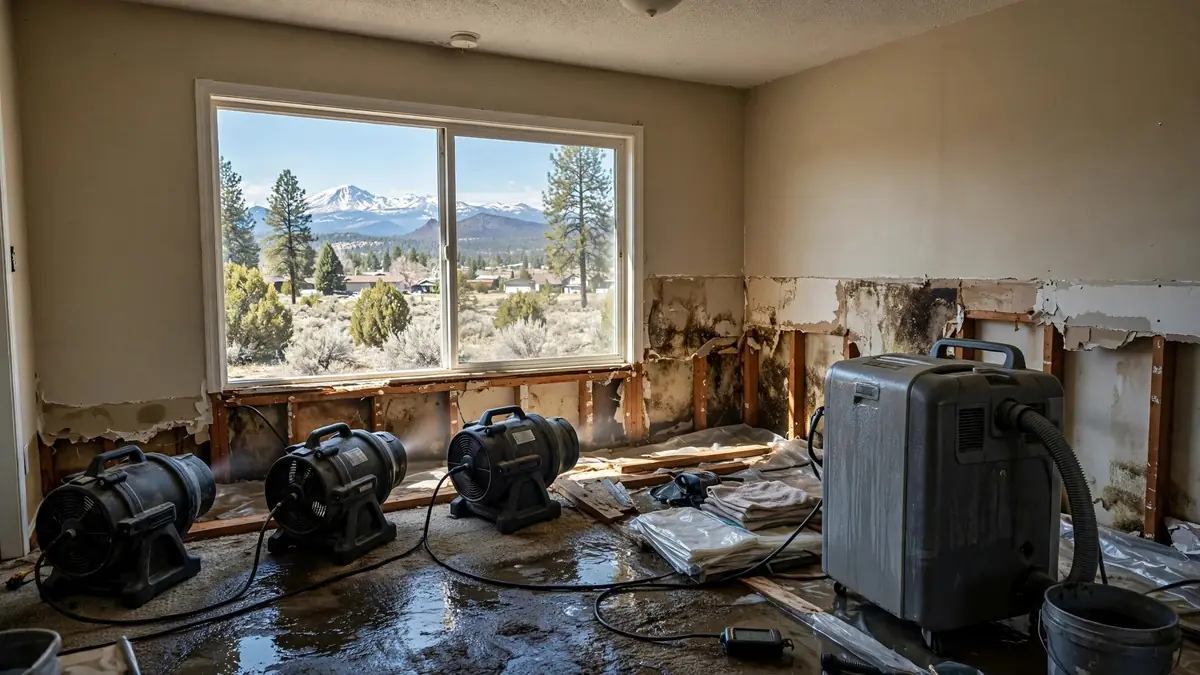
Crews extract standing water, then place air movers and dehumidifiers to pull moisture out of floors, walls and framing. Moisture meters and thermal cameras show where water has traveled behind surfaces, so drying reaches wet areas that look dry.
The equipment runs for days, and readings are taken daily. Drying stops when the materials reach their normal moisture level, not when the room feels dry.
Cleaning and repair
After drying, damaged flooring, insulation and drywall are removed if they cannot be saved, and the area is cleaned and sanitized as the category requires. Repairs follow: drywall, paint, flooring and trim.
Repair work in Oregon is usually done by a licensed contractor, so ask whether the same company does both stages or hands off the rebuild.
Why the first day or two decides the outcome
Guidance from the U.S. Environmental Protection Agency says to dry wet materials within 24 to 48 hours to limit mold growth. Wet drywall, insulation and carpet padding hold moisture and are the first to go bad. A small leak caught early can be a drying job. The same leak left for a week can become a demolition job.
Central Oregon's dry climate helps once the structure is open to dry air, but it does not rescue a wall cavity that stays closed and wet. Cold weather slows drying and can freeze water in an unheated space, so heat and airflow are managed along with the equipment.
This page does not give health advice about mold. If anyone in the home has breathing concerns, speak to a doctor, and treat visible or musty-smelling growth as something to have assessed rather than cleaned with household products.
The pipe, the water and the repairs are three different jobs
A plumber fixes the cause: the split line, the failed fitting or the blocked drain. A restoration company deals with the water and the damage. Insurance usually wants documentation from both.
If a pipe froze and split, start with emergency burst pipe repair or frozen pipe repair to stop the water. If sewage came up, sewer backup explains the first steps. If the source is unclear, leak finding finds it.
This number connects to a water damage restoration provider rather than a plumber. Water damage restoration is treated here as a distinct service from plumbing repair, and the calls are routed to different providers.
Documentation your insurer will want
What to do while the water is still fresh
- Photograph and video every affected room, wide shots and close ups, before anything is moved.
- Write down when you found the water, what you think caused it and when the source was stopped.
- Keep damaged items you can store, and list each with its age and approximate value.
- Save receipts for emergency repairs, equipment and temporary lodging.
- Call your insurer early and ask what they require, including whether they have preferred vendors.
- Do not discard wet carpet or drywall until the insurer has seen it or has told you in writing that you may.
Questions to ask any restoration contractor
Before you sign
- Do you hold current IICRC certifications, and may I look them up on the IICRC site?
- Are you licensed with the Oregon Construction Contractors Board for the repair work?
- Will you provide daily moisture readings and a drying log?
- Can you show a written scope and price before work begins?
- Do you work with my insurer, and who handles the billing?
- Who does the repairs after drying, and is that priced separately?
What decides the cost of water damage restoration
Many homeowners policies cover sudden water events, such as a burst pipe, and exclude gradual leaks and flooding from outside. Your policy decides, so ask early.
Water damage response across Deschutes County
The water damage line covers Bend, Redmond, Sisters, Sunriver and La Pine. If you need emergency water removal first and repairs later, water mitigation explains that first stage.
Water damage calls come from every side of Bend, from older Old Bend houses with crawlspaces to lower levels in Awbrey Butte homes. A burst pipe near the river corridor in River West or the Old Mill District may also point to groundwater, which changes how cleanup is handled.
Water damage restoration questions in Bend
No. A plumber repairs the pipe or drain. Restoration removes the water and repairs the damage. They are separate services and separate calls.
As soon as possible. The EPA advises drying within 24 to 48 hours to limit mold growth.
Often for sudden events such as a burst pipe, and usually not for slow leaks or outside flooding. Your policy and your adjuster decide.
Photograph first and ask your insurer. Pulling wet padding promptly can help, but do not discard evidence before it is documented.
Sewage is Category 3 and needs removal of porous materials and full sanitizing. Tell dispatch so a crew with the right protection is sent.
Yes. The water damage line is open 24 hours, including weekends and holidays.
Water in your home right now?
Stop the source if you safely can, then call the 24/7 water damage line.
Call (833) 521-1033