Commercial Plumbing in Bend, OR
Drain, water heater and leak service for restaurants, breweries, rentals, shops and offices.
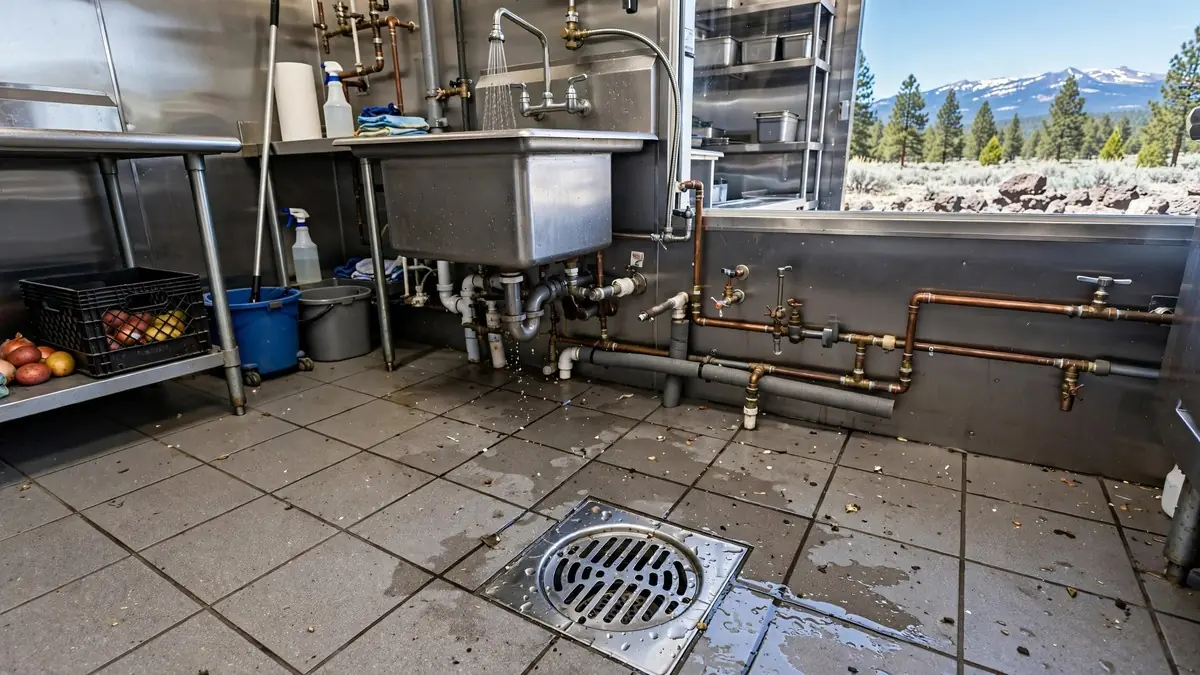
Businesses that call the 24/7 line
| Business type | Common plumbing calls | What to tell dispatch |
|---|---|---|
| Restaurants and breweries | Grease clogs, floor drains, water heaters | Kitchen layout and interceptor location |
| Retail and offices | Restroom clogs, leaks above ceilings | Building access and tenant contact |
| Short-term rentals and lodging | Turnover clogs, water heater failures | Unit numbers and guest check-in times |
| Property managers | Tenant calls, recurring stoppages | Authorization and billing contact |
| Shops and workshops | Floor drains, sinks, utility lines | Hours and equipment nearby |
Bend's restaurant, brewery and lodging scene means many commercial buildings run heavy water and drain loads every day, often late into the evening.
Why commercial plumbing needs a different schedule
A homeowner can bucket a leak and wait. A restaurant with a blocked floor drain cannot open for dinner. Commercial plumbing calls tend to come when the business is busiest, or just after closing, and the cost of downtime often exceeds the cost of the repair.
The 24/7 line takes commercial calls at any hour. Tell dispatch whether the building is occupied, whether customers are present and whether you can control the water supply. That allows the plumber to bring the right equipment and plan the work around your hours.
For a landlord with several buildings, a single shutoff diagram for each site, kept with the manager, can save a long phone call during a leak.
What commercial plumbing covers
Drains, grease and floor drains
Commercial kitchens send fats, oils and starch into drain lines that were not designed for that load. A clog may sit downstream of the interceptor or inside a floor drain that has not been cleaned in a year.
Jetting on a schedule is cheaper than an emergency call. High-pressure jetting is the usual tool for grease lines, and a camera shows the condition.
Water heaters and supply lines
Commercial water heaters carry a heavier load than residential ones, and a failed unit can shut down a kitchen or a bathroom. Sizing, recirculation and code clearances matter.
Supply leaks above finished ceilings or in utility chases are common after cold snaps. A leak tracked early with hidden leak detection avoids a larger repair.
Backflow, grease and permits
Commercial buildings often carry obligations that homes do not. Backflow preventers protect the public water supply from contamination and are typically tested on a schedule set by the local water provider. Backflow testing and prevention covers how that works.
Food service operations are usually required to maintain grease interceptors or traps, and the pumping and cleaning are handled by a separate licensed service. The plumber's job is the pipes and the repair around them.
Commercial plumbing falls under the Oregon Plumbing Specialty Code, built on the Uniform Plumbing Code (UPC), and replacements or alterations usually need a permit and an inspection. Your contractor should pull it.
Setting up so the next call goes smoothly
Keep this on file for each property
- A diagram or photo marking the main water shutoff and each fixture shutoff.
- The location of every cleanout, floor drain and interceptor.
- The make, model and install date of each water heater.
- Contact names for after-hours access and the person authorized to approve work.
- A log of past plumbing problems and repairs.
Turnover days and guest-driven plumbing problems
Lodging and short-term rentals around Bend run on tight turnovers. A toilet that will not flush at ten in the morning, with check-in at four, is a same-day problem. Hosts and managers benefit from naming one authorized contact and keeping a key or lockbox code that dispatch can share with the plumber.
Guests produce their own pattern of failures: wipes in the toilet, grease in the kitchen drain, hair in a shower trap. Posting a short note in the bathroom and putting strainers in every drain costs very little. For properties that sit empty between stays, a monthly check for slow drains and dripping fixtures catches problems before the next arrival.
What changes a commercial plumbing quote
Commercial property policies vary. Business interruption coverage may apply after a plumbing loss, so check with your insurer and keep records of closure time.
Commercial plumbing across Deschutes County
Businesses call from downtown Bend, the Old Mill area and the commercial corridors of 97701, as well as from the Redmond area, Sisters and Sunriver. Business owners dealing with a sudden stoppage can also review clogged drain service for the first steps.
Shops and offices in Boyd Acres, restaurants in the Old Mill District and downtown tenants near Drake Park each run different fixture loads. Floor drains, grease traps and restroom groups are the usual after-hours calls, and rentals need the same 24/7 line.
Commercial plumbing questions in Bend
Yes. The 24/7 line takes commercial calls any hour, including weekends and holidays.
Often yes. Tell dispatch when the building is empty or quiet, and the plumber plans the work around it where the problem allows.
Yes. Grease, floor drains and water heaters are common calls. Grease interceptor pumping is a separate service.
The owner or manager should authorize it. Give dispatch the name of the person who can approve the price.
Replacements and alterations usually do. The licensed contractor pulls it and arranges the inspection.
Yes. Many commercial buildings benefit from scheduled jetting, backflow testing and water heater checks.
Plumbing problem at your business?
Call day or night to get a plumber to the building.
Call (503) 974-3329