Sump Pump Repair & Installation in Bend, OR
Repair or replace a failed sump pump, fix the discharge line and keep a lower level or crawlspace dry.
What a sump pump does in a Central Oregon home
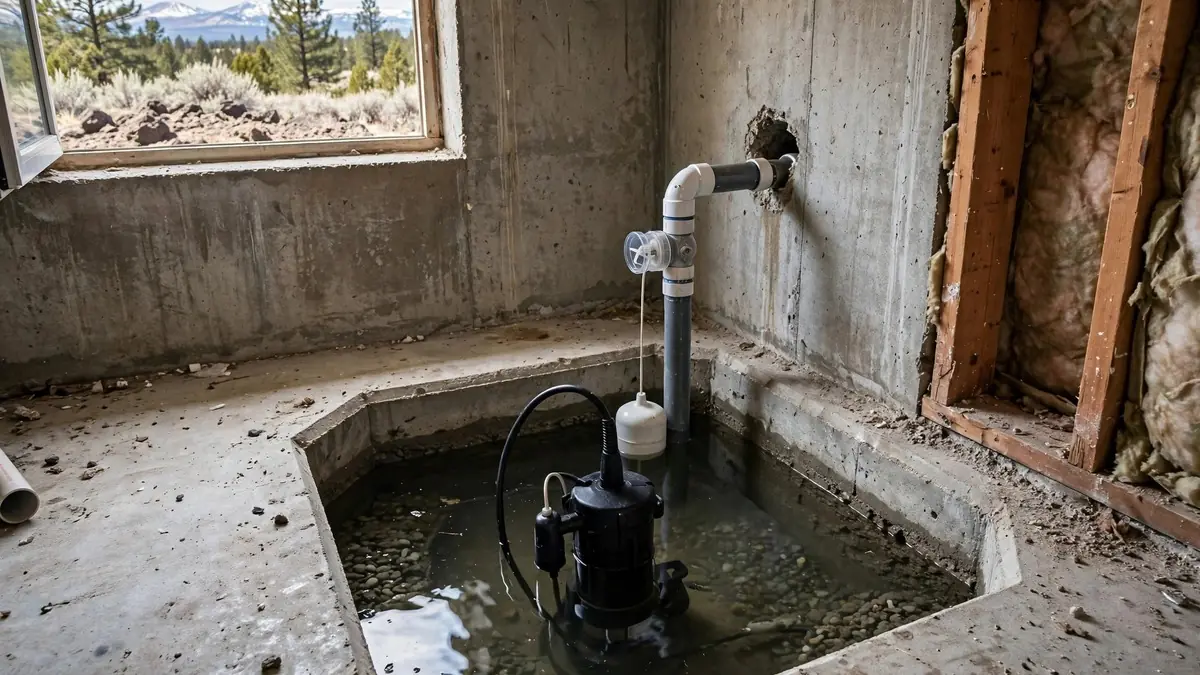
A sump pump sits in a pit, called a basin, cut into the lowest floor of a basement or crawlspace. When groundwater or meltwater fills the basin, a float switch starts the pump and the water is pushed out through a discharge pipe, past a check valve, to a point away from the house. When the pump quits, that water stays where it is, and it ends up in the finished space above it.
Bend is a high desert city with only about a dozen inches of precipitation in a year, so sump pumps are less common here than in wetter parts of the country. They still matter on the homes that have them. Daylight basements on sloped lots, crawlspaces that take on spring snowmelt and lower levels cut into hillsides on the west side of town all lean on a pump to stay dry.
Sump pump repair in Bend usually begins with a short question. Does the pump run, does it move water, and does the water go somewhere sensible? The answers sort most calls into a stuck float, a dead motor, a failed check valve or a frozen discharge line.
Signs your sump pump needs attention
| What you notice | Likely cause | Typical fix |
|---|---|---|
| Pump hums but moves no water | Seized impeller or a stuck check valve | Clear or replace the impeller, or swap the check valve |
| Pump runs nonstop | Float stuck high, or the check valve is letting water fall back | Free or replace the float, replace the valve |
| Pump never turns on, water rising | Dead switch, tripped breaker or failed motor | Reset power, replace the switch or the pump |
| Loud banging after each cycle | Water hammer from a check valve slamming shut | Install a quieter valve and check the discharge slope |
| Water stands in a frozen discharge line | Ice in the outdoor pipe | Thaw the line and reroute or insulate the discharge |
| Musty smell or damp walls near the pit | Basin cover missing or water sitting too long | Seal the cover and test the float height |
A pump that cycles every few minutes in dry weather is a warning. Either groundwater is higher than usual or water is flowing back into the basin from the discharge line.
Sump pumps, ejector pumps and what each one handles
Sump pumps move clear water
A sump pump handles groundwater and meltwater only. It sits in an open or covered basin and passes small amounts of grit. It must never receive wastewater from a toilet, sink or washing machine.
The pump comes in two common styles. A submersible pump sits inside the basin and runs quietly, while a pedestal pump keeps its motor above the pit and is easier to reach.
Ejector pumps move sewage
A sewage ejector pump serves a basement bathroom or laundry that sits below the sewer line. It grinds or passes solids and sends them up to the building drain. The basin is sealed and vented, and the check valve is part of the code requirement.
If a pit receives waste from fixtures, it is an ejector system and a different repair. The sewer backup page explains what to do when sewage rises instead of clear water.
A five-minute sump pump test
Run this before the spring thaw and before a storm
- Pour a bucket of water into the basin and watch the float lift and the pump start.
- Confirm the water leaves through the discharge pipe and does not come back down when the pump stops.
- Check that the outdoor discharge end is clear of leaves, ice and snow and empties well away from the foundation.
- Look for a plugged intake screen or debris sitting on the bottom of the basin.
- If you have a battery backup, press its test button, and note the age of the battery.
- Write down the pump's age. Many pumps wear out in roughly seven to ten years, so a unit near that age is worth planning to replace.
Discharge rules matter as much as the pump
Clear groundwater should not be sent into a sanitary sewer, because it overloads the sewer system and the treatment plant. Many sewer authorities prohibit the connection, so ask the City of Bend or your local building authority where discharge is allowed before you tie the pipe in. A home on septic must never send sump water to the tank or drainfield, since the extra volume can flood the drainfield.
The usual answers are a discharge pipe that daylights to a lawn or gravel area well away from the foundation, or a connection to a storm drain or drywell where the local authority allows it. Send water to a neighbor's lot and you invite a dispute. Send it onto a driveway in January and you build an ice sheet.
New or replaced work follows the Oregon Plumbing Specialty Code, which builds on the Uniform Plumbing Code (UPC), with a permit where one applies. A plumber checks the check valve, the basin cover and the pipe sizing as part of the job.
Cold, outages and backup power
A sump pump is most needed when snow melts quickly or a rain-on-snow event hits, and those events often come with power problems. A winter storm that takes out the grid also stops the pump. A battery backup or a water-powered backup pump keeps the basin from filling during the outage.
The outdoor end of the discharge pipe is the other cold-weather weak spot. If it freezes, the pump pushes water into a blocked pipe and either burns out or floods the basin. A plumber can fit a freeze-resistant outlet, a short drop-down extension or an insulated run, so winter water has a path out.
If a flooded lower level has already happened, burst pipe repair and leak detection help separate a groundwater problem from a supply-line problem, since both can leave water on a basement floor.
What a new sump pump installation includes
A new installation starts with the basin. If the lower level has no pit, a crew cuts the concrete, digs the hole, sets the liner on a bed of gravel and patches the slab. If a pit already exists, the old pump comes out, the basin is cleaned and checked, and a new pump is set on a firm base.
The plumber then fits the discharge pipe, a check valve above the pump, and a weep hole where the design calls for one. The pump is tested with water, and the float is set so the pump starts before the water reaches the slab. Ask for a pump rated for the lift and flow your house needs, not just the biggest one on the shelf.
What changes the price of sump pump service
Homeowners policies often exclude groundwater and a failed sump pump unless a specific endorsement is added, so read your policy before a wet season. Photograph the basin and any water line on the wall before cleanup.
Sump pump service across Bend and nearby towns
Calls come from Bend neighborhoods built into slopes, such as Awbrey Butte and the west side near NorthWest Crossing, as well as homes along the Deschutes River corridor near the Old Mill District. Outside the city, Redmond, Sisters and Tumalo homes with basements or low crawlspaces send similar calls.
If standing water has already reached a living space, the water damage restoration page covers cleanup, which is a separate job from fixing the pump.
Sump pump calls cluster on hillside lots such as Awbrey Butte and on lower levels near the Deschutes in River West and the Old Mill District. A pit that sits near the river corridor tends to see more water in spring and needs a reliable pump and discharge route.
Sump pump questions in Bend
Many pumps wear out in about seven to ten years, depending on how often they run and whether the water carries grit. A pump that runs constantly may fail sooner.
A stuck float, a failed check valve letting water flow back, or high groundwater from nearby irrigation or snowmelt can all keep it running.
No. A sump pump moves clear groundwater, while an ejector pump moves wastewater and solids from fixtures below the sewer line. They use different basins and different rules.
Not into a septic system, and often not into a sanitary sewer. Ask the City of Bend or your building authority, since the rules depend on where you live.
If your lower level would flood when the pump stops, yes. A winter storm can cut power right when snowmelt or rain is at its highest.
If water is rising in the basin or on the floor, yes. Keep out of standing water near outlets, and call.
Water rising in the basin?
Call now. Dispatch tells you what to do while the plumber is on the way.
Call (503) 974-3329