Water Mitigation in Bend, OR
Emergency water removal and drying that limit damage in the first hours after a leak or flood.
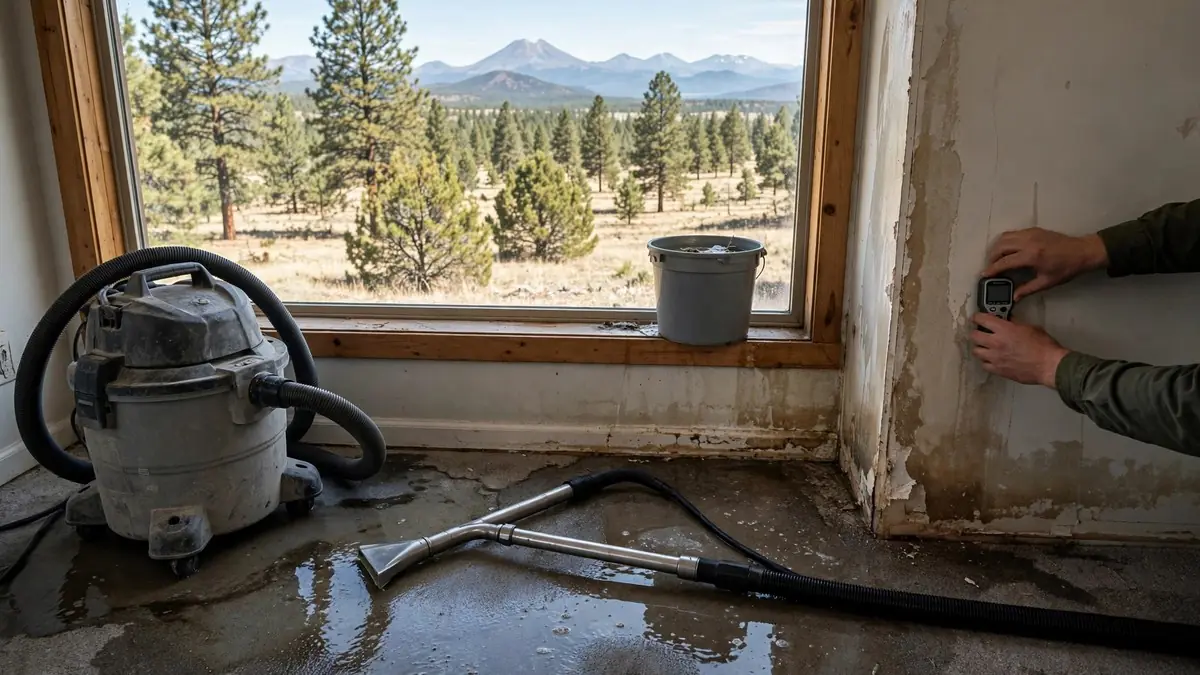
Mitigation stops the damage, restoration repairs it
| Water mitigation | Water damage restoration | |
|---|---|---|
| Goal | Limit further damage right now | Return the property to its prior condition |
| When | First hours and days | After the structure is dry |
| Typical work | Extraction, protecting contents, setting drying equipment | Removal of unsalvageable materials, cleaning, rebuild |
| Who | Emergency response crew | Often the same company, sometimes a separate contractor |
| Insurance view | Usually required to prevent further loss | Follows the claim scope |
A mitigation visit is meant to be fast. The decisions that follow, including repair scope, come after the water is under control.
How a mitigation response unfolds
Make it safe
Utilities and hazards are checked before crews enter.
Remove the water
Pumps and extractors take out standing water.
Protect and move
Contents are lifted, moved or blocked up.
Start drying
Air movers and dehumidifiers are set and logged.
Most of the benefit of mitigation comes in the first day. Each extra day of wet drywall and flooring raises the repair bill.
Steps for the homeowner while help is on the way
Safety first, then damage control
- Stay out of rooms with standing water if outlets, cords or appliances are wet. Turn off power at the panel only if you can reach it dry.
- Close the main water valve if a pipe is the source, and open a low faucet to drain the line.
- Lift small items, rugs and furniture legs onto foil or blocks to keep them out of the water.
- Open closet doors and cabinets to let air move, and run fans only if the power is safe.
- Do not use a household vacuum on water, and do not heat the room with space heaters near wet material.
- Photograph the scene before you move anything.
What the machines are doing
Extractors and pumps
Truck-mounted and portable extractors lift water out of carpet, padding and hard floors. A submersible pump moves standing water out of a basement or crawlspace. Remove the water early and the drying time drops, sometimes by days.
Padding under carpet often cannot be saved and is removed so the floor underneath can dry.
Air movers and dehumidifiers
Air movers push air across wet surfaces so water evaporates. Dehumidifiers then pull the moisture out of the air so it does not settle back into the structure. Together they work faster.
In Central Oregon's low-humidity climate, a closed room dries well once the equipment runs. A wall cavity needs airflow behind it, which may mean a small opening in the drywall.
Why insurers expect prompt mitigation
Most homeowners policies expect you to take reasonable steps to prevent further damage after a covered loss. Waiting is the expensive mistake, because delay can cut what a policy pays and let mold start. Emergency water removal and drying are usually treated as part of the claim when they follow a covered event.
Keep every receipt. Keep the drying log too. The log shows moisture readings by day and by room, and it is the main proof that the structure reached dry standards. Ask your insurer which documents they require and whether they need to approve the contractor.
If the cause of the water was a plumbing failure, a plumber's repair record belongs in the same file. The plumbing pages, such as burst line repair and leak tracing, describe how those are documented.
What changes the cost of mitigation
Insurance often pays for mitigation after a sudden event. If your policy requires approval, call the insurer while the crew is on the way.
Water mitigation across the Bend area
Response covers Bend, Redmond and the nearby towns of Sisters and La Pine. For the repair stage that follows drying, structural drying and restoration describes categories, repairs and choosing a contractor.
Mitigation crews work across Bend neighborhoods from Old Bend and Drake Park to Southern Crossing and Larkspur. The sooner standing water is extracted from carpet, padding and drywall, the less likely it is to spread into framing and flooring.
Water mitigation questions in Bend
It is the emergency work that limits further damage: removing standing water, protecting belongings and starting drying.
Mitigation stops the damage in the first hours and days. Restoration repairs and rebuilds afterward.
Call the water damage line first if the water is spreading. Then call your insurer promptly, since they may have requirements.
Often three to five days, depending on the materials and the amount of water. Daily readings show when it is done.
Only if the power is safe and no outlets are wet. Otherwise wait for the crew.
Yes. The water damage line is open 24 hours a day, including weekends and holidays.
Need water removed fast?
Call the 24/7 water damage line and shut off the source if you safely can.
Call (833) 521-1033