Low Water Pressure in Bend, OR
Test the pressure, pin down the cause and fix it, whether the problem is a valve, a pipe or a well.
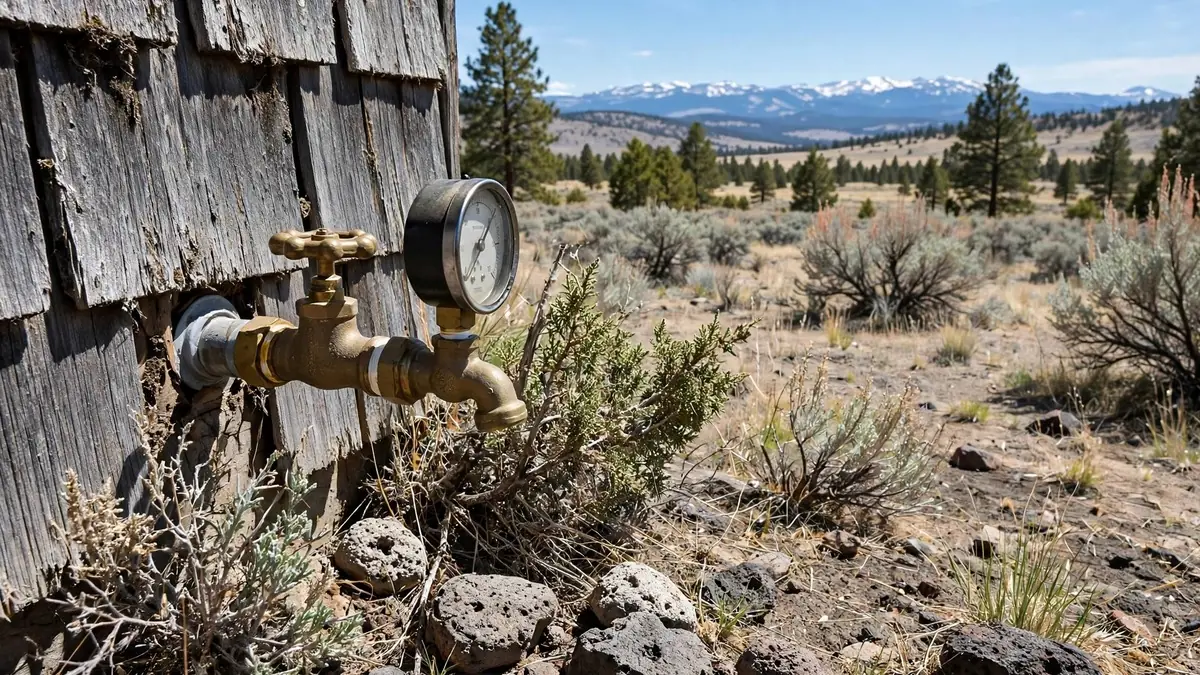
Where is the pressure low?
| What you notice | Likely cause | First check |
|---|---|---|
| One faucet is weak | Clogged aerator or partly closed stop valve | Unscrew the aerator and clean it |
| Only hot water is weak | Water heater valve, sediment or corroded hot line | Compare to cold at the same fixture |
| Every fixture is weak | Regulator, main valve or supply line problem | Test pressure at a hose bib with a gauge |
| Pressure fell suddenly | Main valve partly closed or a break in the line | Check the meter and house valve |
| Weak only at the same time of day | Shared demand on the supply or a failing regulator | Note when it happens and test then |
| Well home with swings | Pressure switch, tank or pump | Read the gauge and listen for cycling |
The pattern tells you more than the symptom does. A single weak tap is rarely the same problem as a weak house.
Five minutes with a pressure gauge
A cheap gauge answers most questions
- Attach a hose-bib pressure gauge to an outdoor spigot, with no water running in the house.
- Note the static pressure. Most homes are comfortable around 40 to 60 pounds per square inch.
- Open a few faucets and watch for the number to fall. A big drop under flow points to a restriction.
- Check the main shutoff and the meter valve are fully open.
- Write the readings down and share them with the plumber.
What usually turns out to be wrong
Regulators and valves
Many homes have a pressure-reducing valve near the main. When its spring or seat wears, pressure can drop or swing. A partly closed gate valve after a repair is another frequent culprit. These are cheap to fix once found.
The Uniform Plumbing Code (UPC), as adopted in Oregon, requires a pressure-reducing valve where static pressure exceeds 80 psi, which is why too high is also a problem.
Corroded pipe and hidden leaks
Older galvanized steel lines can scale from the inside until the opening narrows. Good static pressure with poor flow under load points to this. A hidden leak between the meter and the house can drop pressure too, and leak finding can confirm it.
If the pipe is the problem, the fix is a section or whole replacement, as covered on the repiping page.
Low pressure when the water comes from a well
On a well, pressure comes from the pressure tank and the switch, not the street. A switch set too low, a tank that has lost its air, or a pump that is wearing out can all produce weak flow. A gauge that never reaches the cut-out pressure suggests the pump is not keeping up.
Sediment or iron can also clog a filter or a screen at the pump, which cuts flow. The fix begins with the gauge and a flow test, and the pump and pressure tank repair page covers the full list of causes.
Why one neighbor can have more pressure than another
Water pressure on a municipal system depends partly on elevation. Homes at the top of a rise can see lower pressure than homes at the bottom. Bend has both. A pressure-reducing valve brings high pressure down but cannot raise it above what the system supplies.
If a whole street has lower pressure, call the provider before paying a plumber. If only your house is weak, the cause is on your side of the meter.
What decides the repair cost
Insurance rarely covers a worn-out regulator or scaled pipe. If a hidden leak caused damage, the damage may be covered, so keep the diagnosis in writing.
Low pressure calls across the area
Calls come from across Bend and the rural homes around Tumalo. If hose bibs are part of the problem, the outdoor side is covered in hose bib repair.
Pressure differs by elevation, and homes up the slope on Awbrey Butte can see lower pressure at the tap than homes down near the river in Old Bend or River West. A gauge reading at the hose bib shows whether the cause is the street, the regulator or a leak.
Low water pressure questions in Bend
Most homes feel comfortable between about 40 and 60 pounds per square inch. Code limits static pressure to 80 psi before a reducing valve is required.
Common causes are a failing regulator, a partly closed valve, corroded supply pipe, a hidden leak or, on a well, a pressure tank and pump issue.
Yes, and it is a modest job when the valve is accessible. The plumber tests the pressure before and after.
The water heater, its valves or the hot line may be restricted. Sediment and corroded fittings are common.
A sudden drop with no water may be a break in the line and is urgent. A slow decline can wait for a scheduled visit.
Not above what the system supplies. A plumber fixes problems on your side of the meter.
Weak pressure all through the house?
Call with your gauge reading, and a plumber can tell you what to check next.
Call (503) 974-3329